How Glaze Thickness Creates Crawl Glaze Effects — A Ceramics Glaze Review
Most potters think of crawling as a glaze defect — something that went wrong. The glaze pulled away from the clay, left bare patches, and ruined the piece. But crawl glaze is one of the most deliberately interesting ceramic surface textures you can create. And one of the simplest ways to make it happen isn't a special recipe or a specialist material. It's something much more basic.
This is a quick glaze review from one of my recent test sessions: three sets of silicon-aluminum mapping tests, each one exploring how glaze chemistry and application interact to produce crawl glaze effects, crackle textures, and special effect glaze surfaces — in very different ways across the same firing.
Every ceramicist has had a glaze fire totally differently than expected — and thickness is often why. In this video I show exactly how application thickness changes glaze results, using silicon-aluminum mapping tests and the Stull chart to explain what's happening chemically. From glossy to matte, crawling, and full lava effects — all from the same glaze, just applied differently.
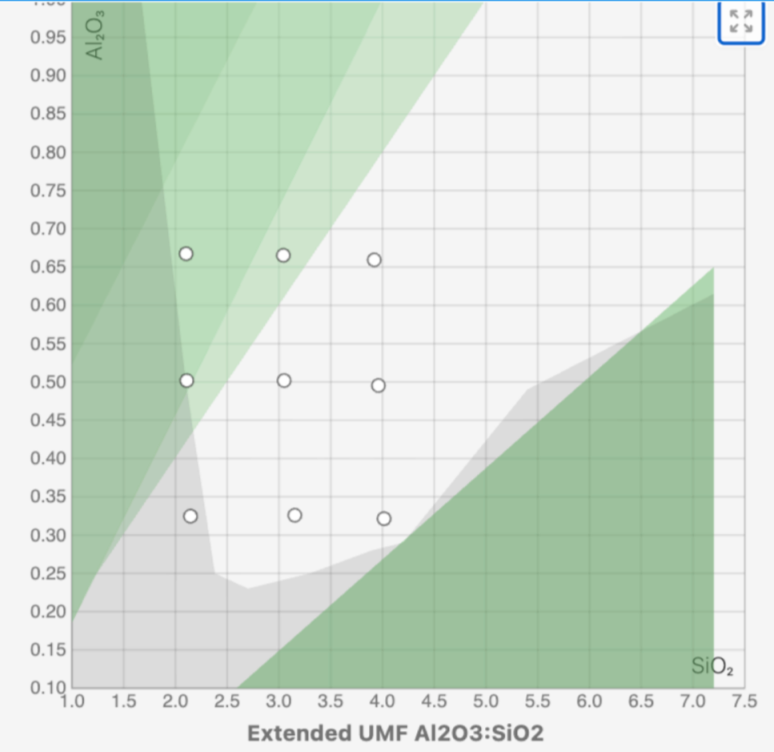
Stull Chart and Si:Al Mapping
What Is Silicon-Aluminum Mapping? (And Why Potters Use It)
The Stull chart — also called the Extended UMF or Al2O3:SiO2 chart — is a glaze prediction tool and one of the most important references in glaze chemistry for artists. It plots alumina (Al2O3) on the vertical axis and silica (SiO2) on the horizontal axis, and each zone predicts how a fired glaze will look:
White area — glossy glaze
Light green — semi-matte
Dark green — matte glaze
Bottom-right corner — underfired
Most potters use it to navigate between glossy and matte. But the Stull chart also tells you something crucial for special effect glazes: how easily a glaze will melt. And how easily it melts is directly connected to whether it crawls, puffs, or stays put.
How Glaze Thickness Triggers Crawl Glaze Effects
Here's something that surprises a lot of people when they start running systematic tests: you don't need a specialist recipe to get a crawl glaze. You can take a fairly ordinary glaze — a matte glaze, a mud glaze, even a lava glaze — apply it thicker than usual with less water than usual, and watch it crawl.
Kaolin-heavy glazes are particularly prone to this. Kaolin and China clay are plastic clay minerals that shrink significantly as a glaze dries. When you apply a high-clay glaze in a thick, water-poor layer, the glaze contracts as it dries, cracks, and either lifts away from the clay body or fuses mid-movement into a dramatic crawl texture. You're setting up the conditions for crawling before the piece even goes into the kiln.
This is one of the more interesting ceramic texture techniques because the material is doing the work — you just have to understand what's happening and when to let it.
Three Test Sets: Crawl Glaze Effects Across Different Glaze Types
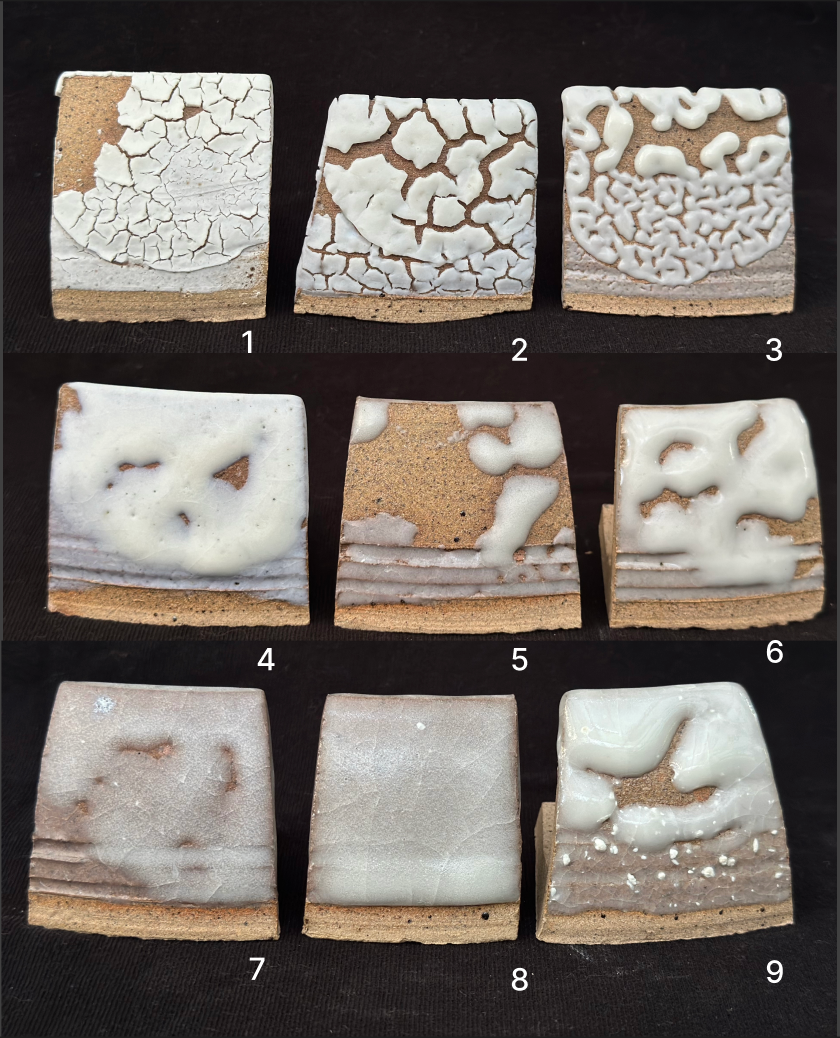
Test Set 1: Matte Glazes and Thick Application on Flat Tiles
The first set was a group of mud glazes — high-clay, matte glazes tested on flat square tiles, each mapped to a different position on the Stull chart. The results were striking: tiles in certain chart areas produced dramatic crawling and crackle glaze effects, while tiles in others stayed smooth despite identical application. What the chart predicted and what the kiln produced lined up almost exactly. It's a convincing demonstration of why silicon-aluminum mapping matters for anyone experimenting with textured glaze techniques.
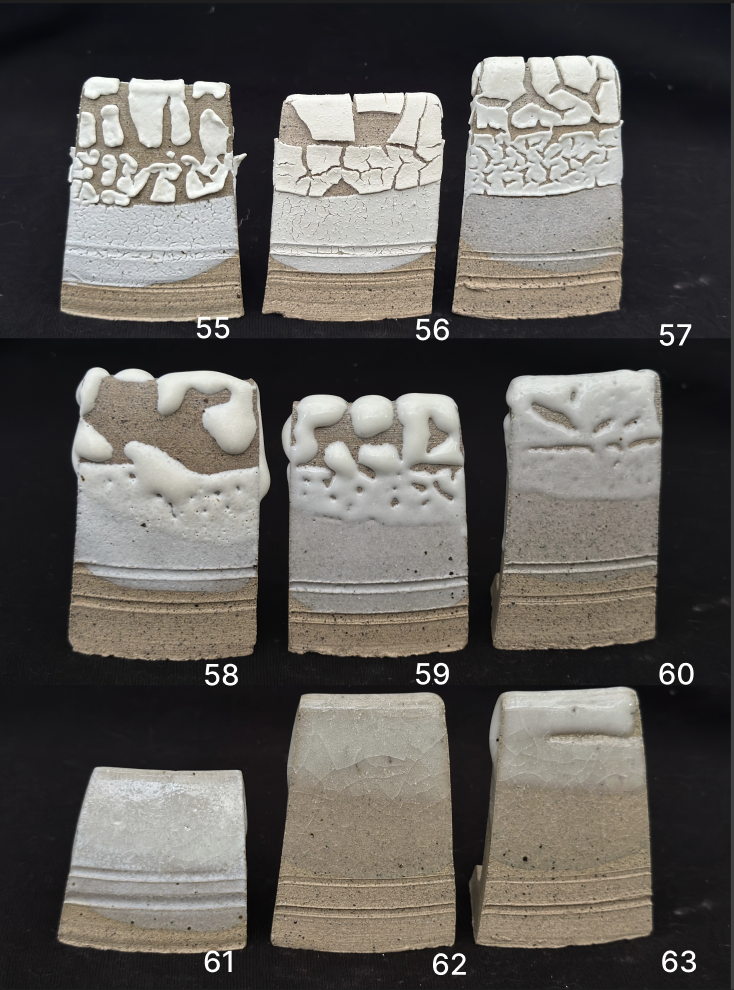
Test Set 2: Larger Tiles, Thick Layers, One Standout Matte
The second set used taller tiles and tested a wider range of glaze positions. The bottom row — mapping into the glossy zone — behaved predictably: smooth and glassy, even with the thicker application. But one tile stood out: a matte glaze in an extremely thick layer that produced a matte crawl I hadn't seen before. Dense, tight, almost velvety — the kind of ceramic surface texture that comes from the interaction between chemistry and application weight, not from a recipe.
One important thing this set confirmed: if you underfire too aggressively, the glaze doesn't crawl — it falls off completely. Worth keeping in mind if you're exploring underfired glaze effects on decorative ceramics.
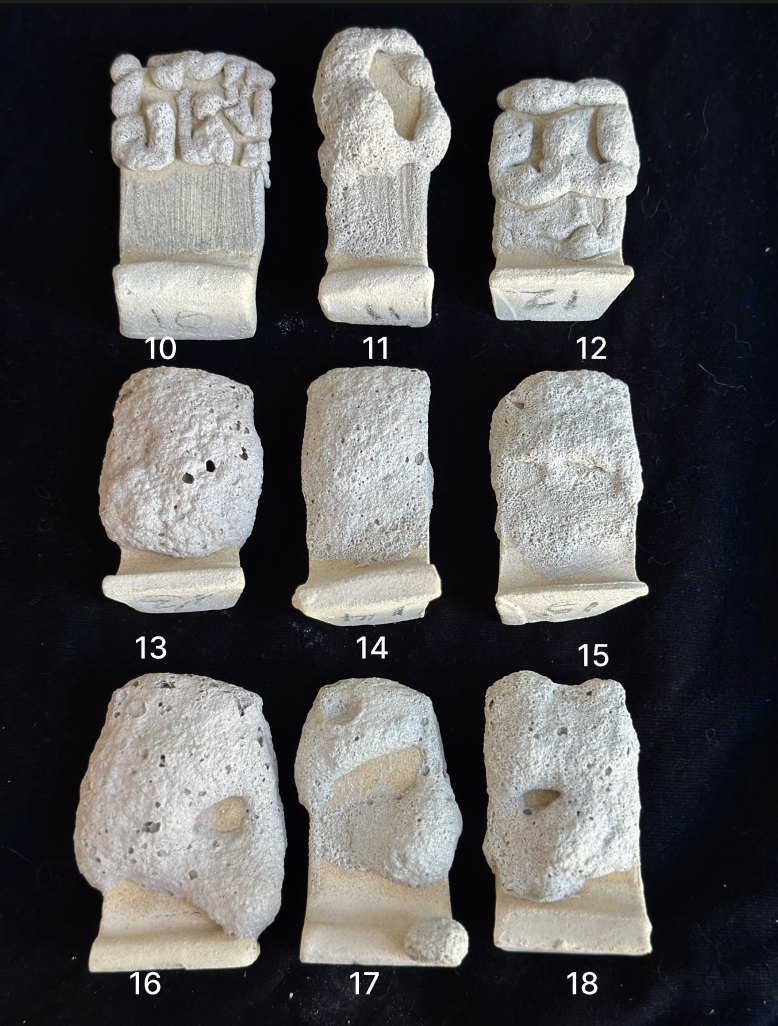
Test Set 3: Lava Glaze in a Thick Layer
The third set introduced lava glaze — and showed something fascinating about how a lava glaze result changes across a firing range. Lava glaze relies on silicon carbide (SiC) for its characteristic volcanic, pitted surface. Silicon carbide off-gasses during firing, which is what creates those open, crater-like textures. But that process is temperature-dependent.
When a lava glaze is underfired — either from kiln conditions or because a thick application makes it harder to heat through — the silicon carbide effect doesn't fully develop. Instead of opening into a volcanic glaze surface, it stays in an earlier, puffier stage: a bubbly, crawling special effect glaze that looks almost foam-like. The same recipe, applied the same way, produces two completely different ceramic textures depending on how hot it gets.
Who Are These Glaze Textures For?
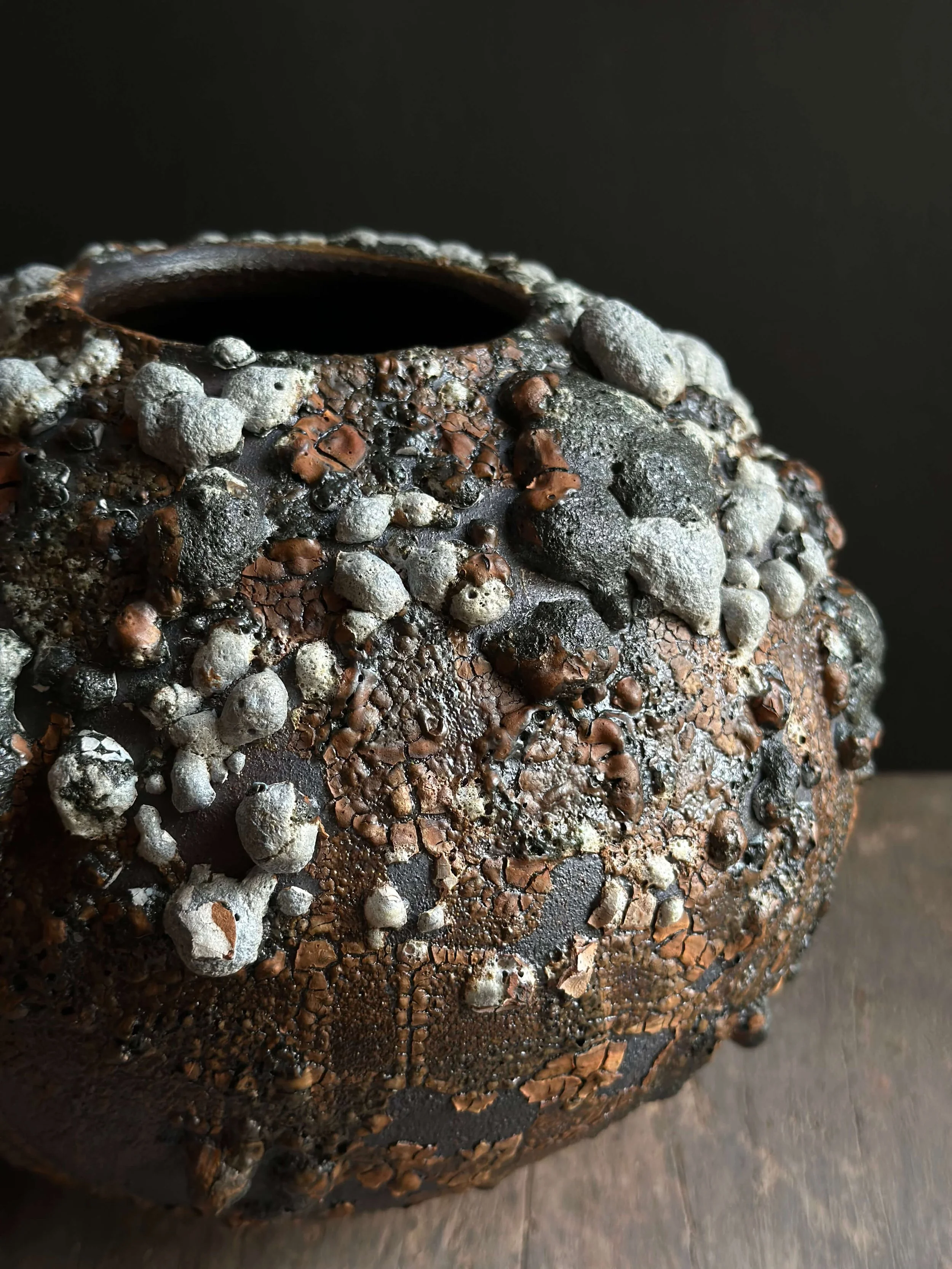
Ceramic textured vessel by Maria Loram
These are decorative glaze surfaces — not functional ones. Crawl glazes and underfired special effect glazes are porous and not food-safe. But for decorative ceramics — sculptures, textured ceramic vases, wall pieces, wabi-sabi pottery, art objects with organic pottery surfaces — they open up territory that a well-fired glossy glaze never reaches.
The earthy, nature-inspired ceramic aesthetic that so many makers are drawn to right now — rough surfaces that look like volcanic rock or weathered stone — often comes from exactly this kind of deliberate underfiring and thick application. It's not an accident. It's a technique.
Want to Learn How to Create Special Effect Glazes?
I don't share full recipes in this post — partly because glaze results depend so much on your specific kiln, clay body, and firing temperature, and partly because I think the method matters more than the recipe.
If you want to go deeper:
The Glaze is Lava is my dedicated online course on lava glaze, crater glaze, and silicon carbide-based special effect glazes. It covers the variables that change results — SiC mesh size, flux ratios, application, troubleshooting — so you understand why glazes behave the way they do, not just what to mix.
Textures in Ceramics is a broader 8-week online course covering ceramic texture techniques from natural materials (slips, rocks, sand, combustibles) through to textured and lava glazes. It's the right starting point if you want to develop a whole vocabulary of ceramic surface decoration.
And if you're specifically after glaze recipes and test results — including my monthly experiments — I post those on my Patreon.
What textures are you experimenting with right now? I'd love to know — send me an email or find me on Instagram.
About the Author
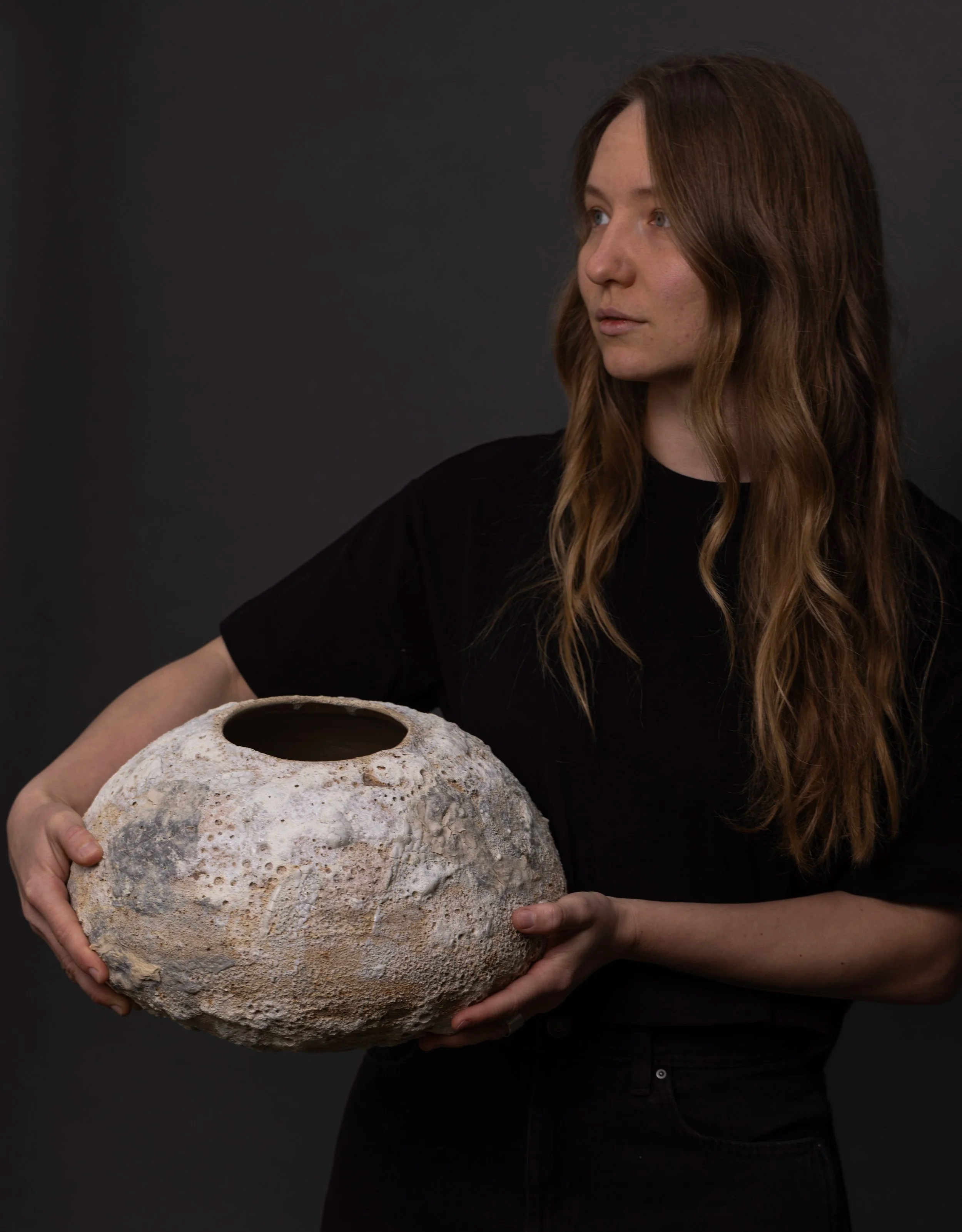
Hi, I’m Maria — a ceramic artist based in the US. I make sculptural lighting and hand-built vessels, and I share my studio process online.
I teach ceramics internationally and online. → loramceramics.com
This checklist is part of a growing library of free guides for ceramic artists and makers.