The Quiet Surface: Why Natural Ceramic Textures Are the Most Compelling Thing in a Room
On organic pottery, volcanic glaze, wabi sabi ceramics, and the case for surfaces that don't compete for your attention
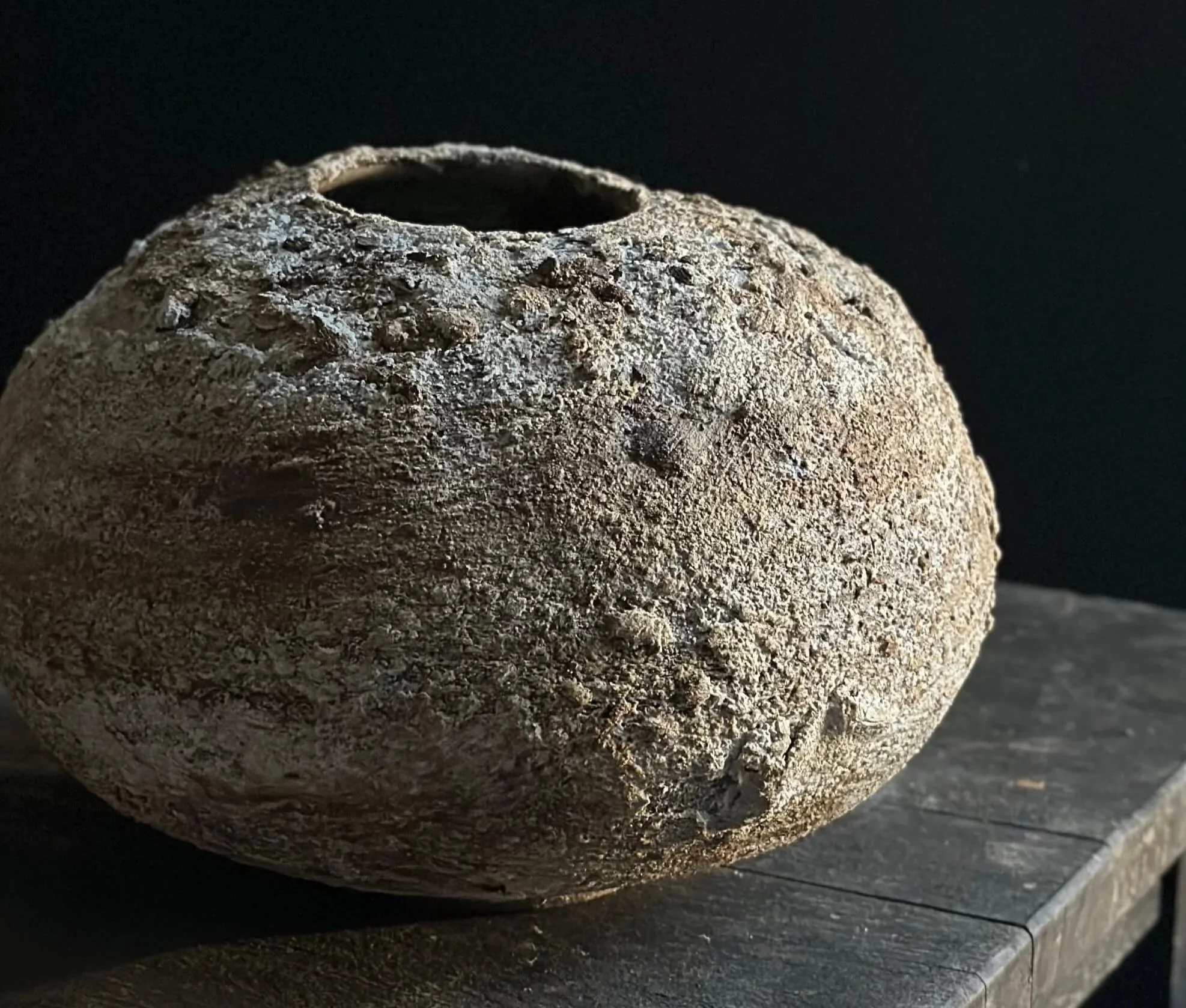
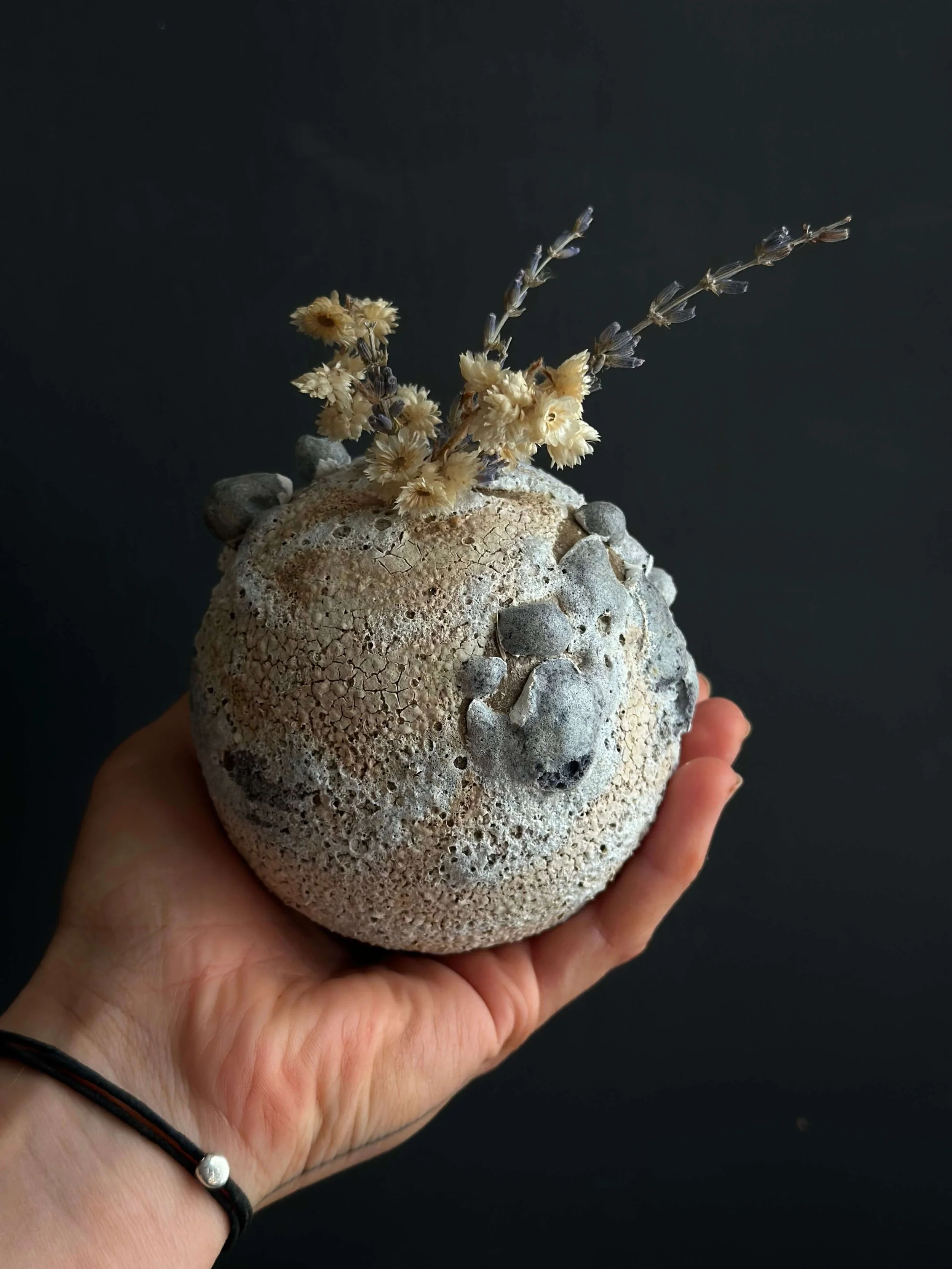
Wabi-sabi textured moonjar by Maria Loram
We live in a time that rewards the immediate: bright colour, high-gloss finishes, perfect edges, viral content — and now AI, where a new look or image can appear in seconds. A surface is expected to read instantly and disappear with the next swipe.
Nature runs on a different clock.
Step into a forest after rain — wet bark, moss, stone, the smell of soil — and you're surrounded by surfaces that weren't designed to impress. They simply exist, and they change slowly. Nature's language is quiet. It doesn't compete for attention. To notice it, you have to slow down and accept that real processes take time.
Texture is one of the clearest ways this quiet language reaches us. It sidesteps familiar visual shortcuts — recognisable forms, predictable colour stories — and goes straight to touch, shadow, and abstraction. In a culture that pushes us to be seen, to sharpen an identity, and make individuality louder, a rough or porous ceramic surface texture can be a small step aside. When you step aside, something larger comes forward: the material, the land, the process, the way earth and fire collaborate.
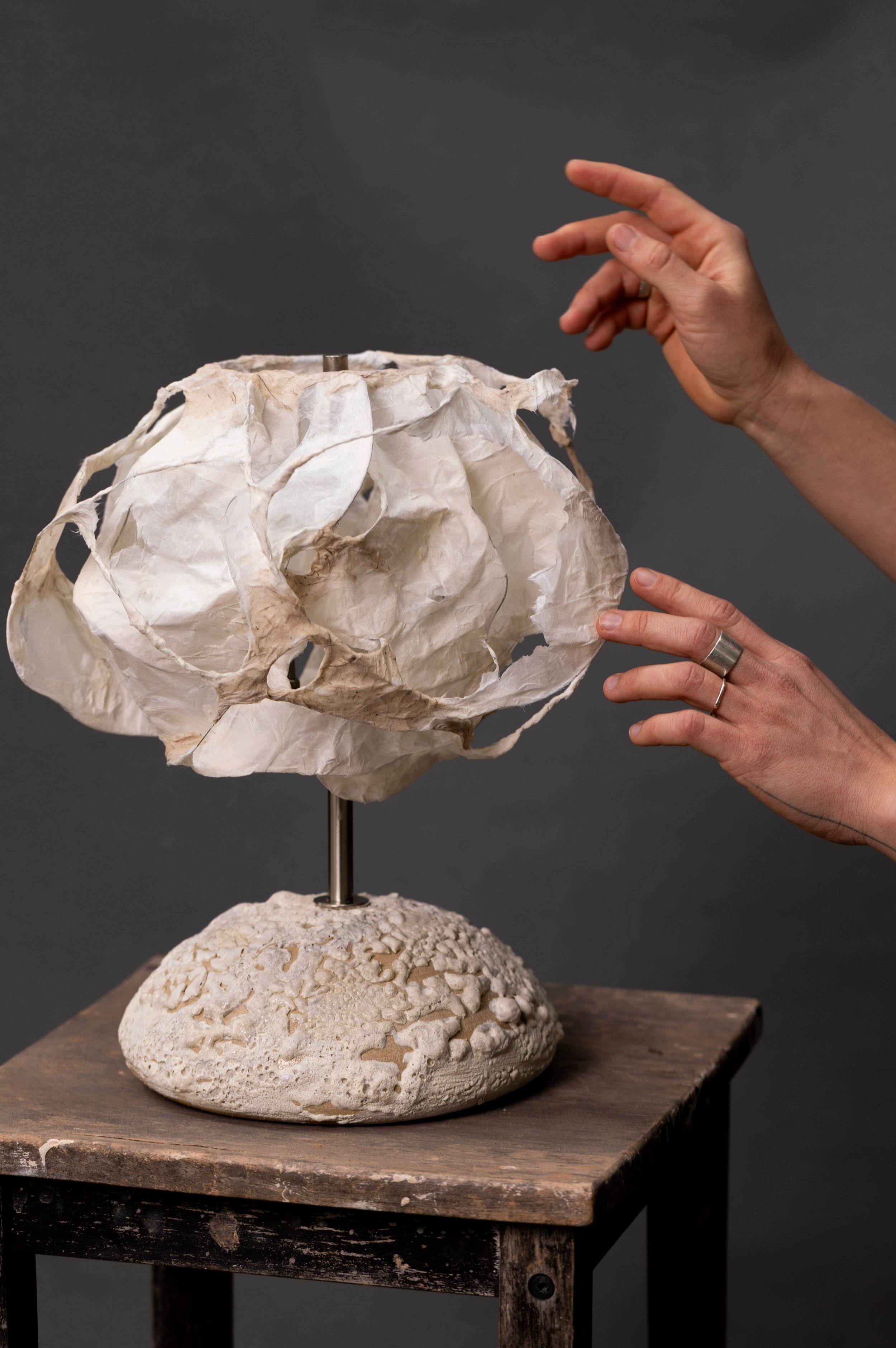
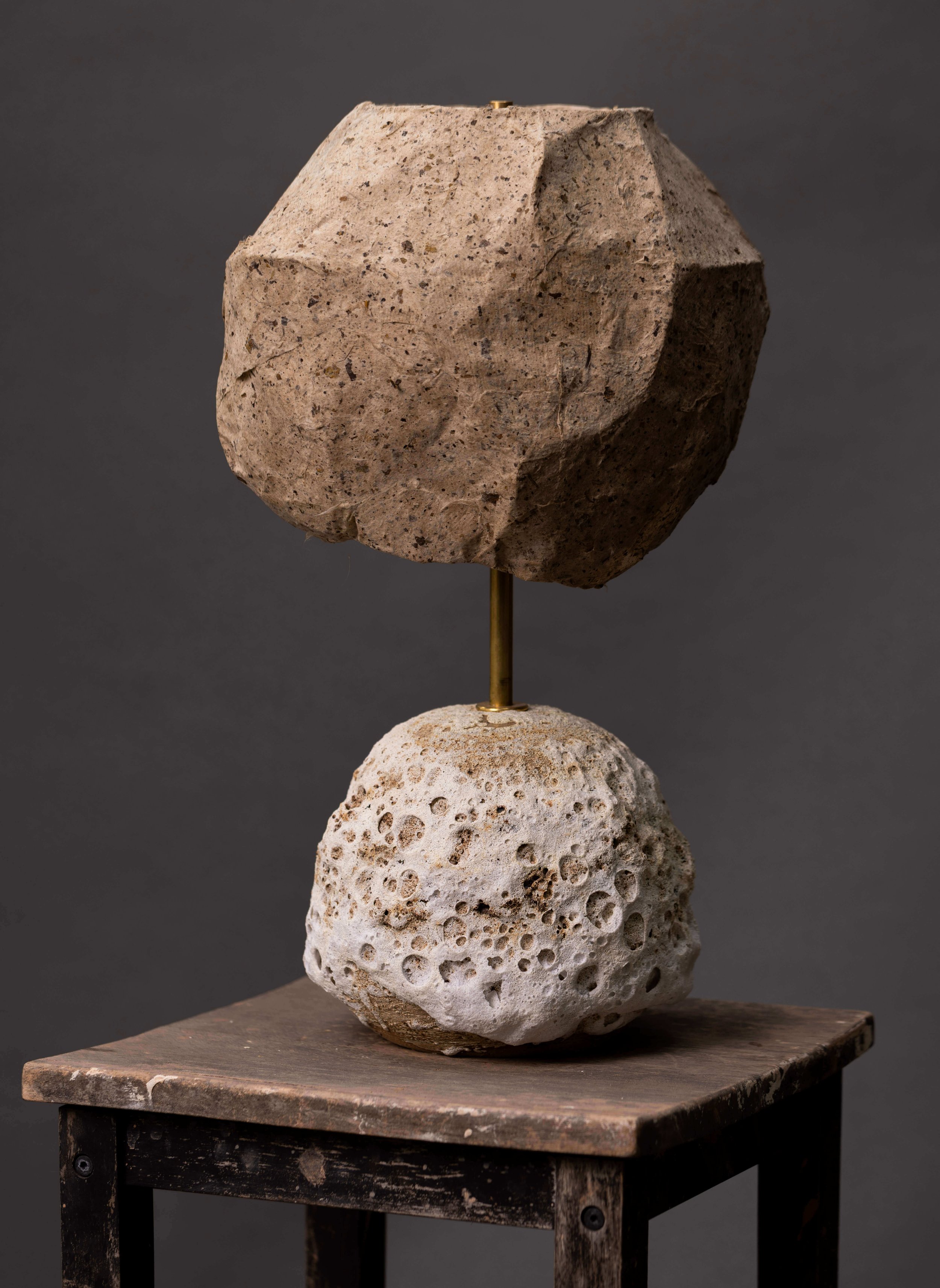
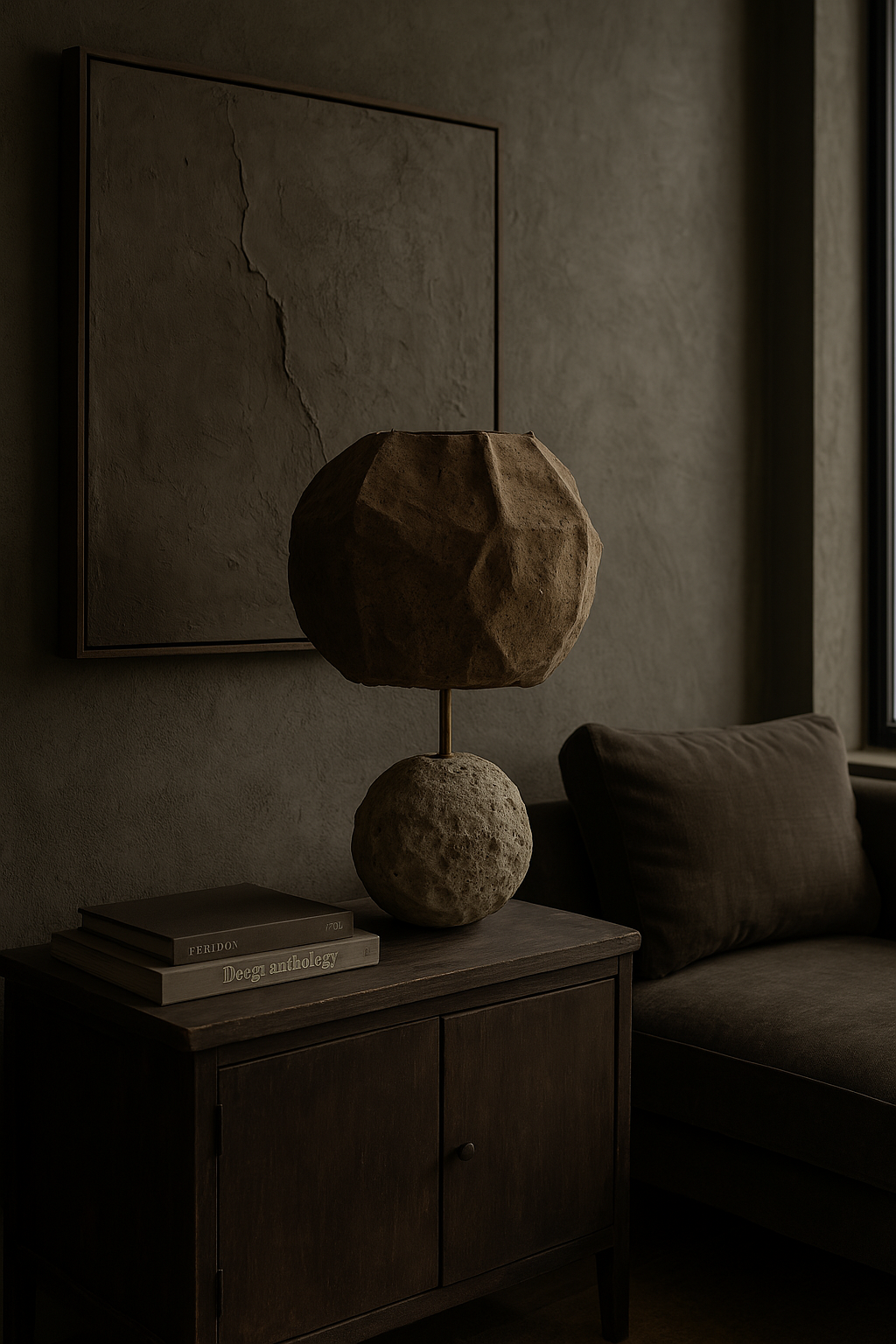
Unique ceramic lamp with a natural paper lampshade by Maria Loram
What We Mean When We Talk About Natural Texture in Ceramics
Natural organic textures are not just an aesthetic choice. They are a different relationship with material.
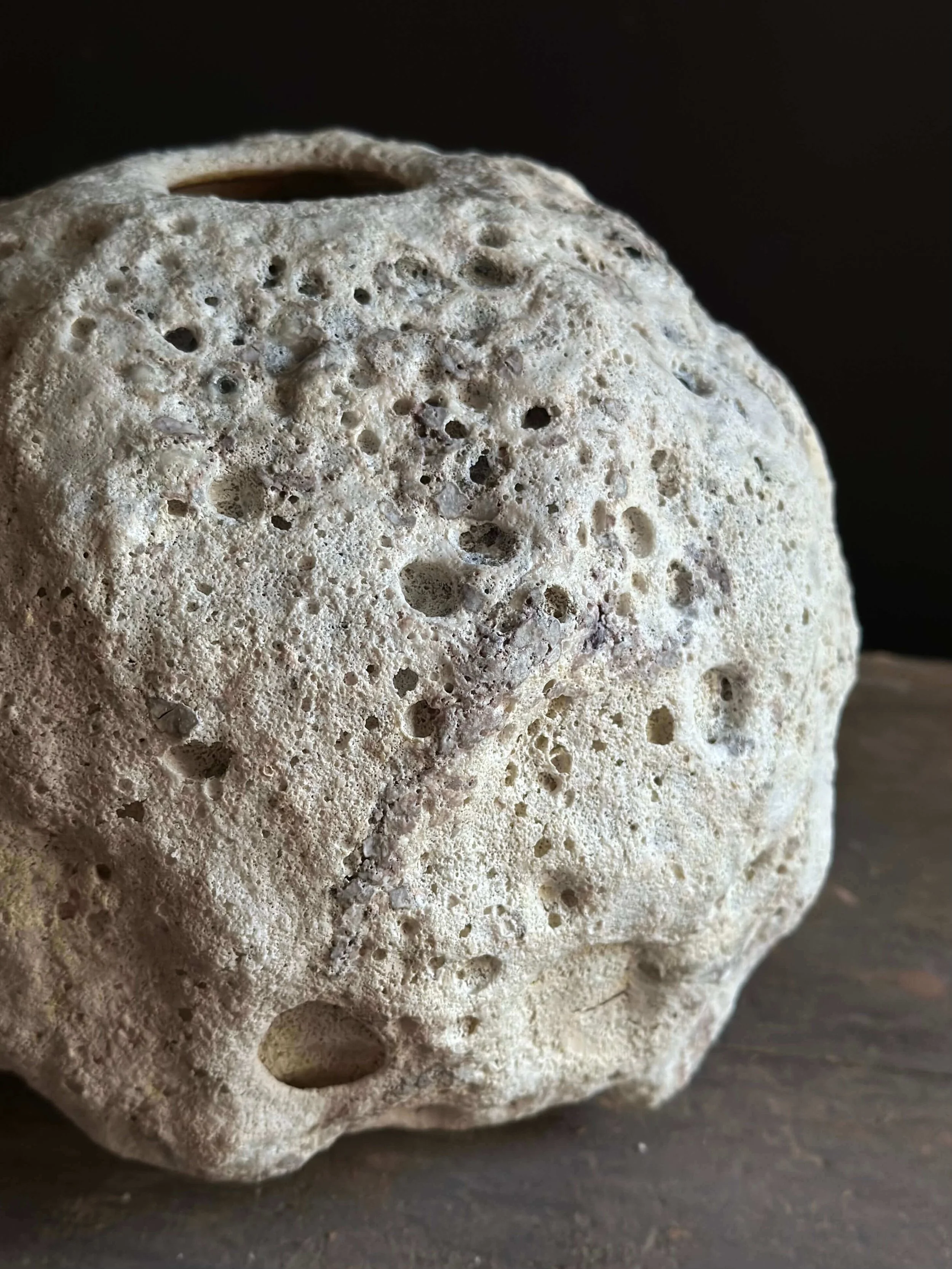
When I talk about natural texture in ceramics, I mean ceramic surface textures that carry evidence of how they were made — and of what they're made from. Surfaces that shift as light moves across them. That reveals new details the longer you look. Surfaces that feel surreal, non-human, as if they arrived from the ocean floor or a volcanic field rather than a studio in Pasadena. This is the organic pottery aesthetic I have always been drawn to: surfaces that look less designed than discovered.
The vocabulary of these surfaces is wider than it might first appear. Texture lives in spectrums:
Rough ↔ Smooth — abrasion versus polish, teeth versus silk.
Dense ↔ Porous — compact versus open, heavy versus breathing.
Matte ↔ Gloss — absorbed light versus reflected light.
Micro ↔ Dramatic — a surface you discover up close versus one that reads across a room.
Order ↔ Wildness — engineered pattern versus organic randomness.
The most interesting nature-inspired ceramics tend to live toward the wilder ends of these spectrums. Rough, porous, matte, discovered slowly. Not designed so much as coaxed into existence.
Ceramic Materials That Make Texture Possible
Pottery surface decoration is one of the oldest forms of human expression — and also one of the least understood. Natural organic textures in pottery come from two broad directions: the clay body itself, and the glaze surface applied over it.
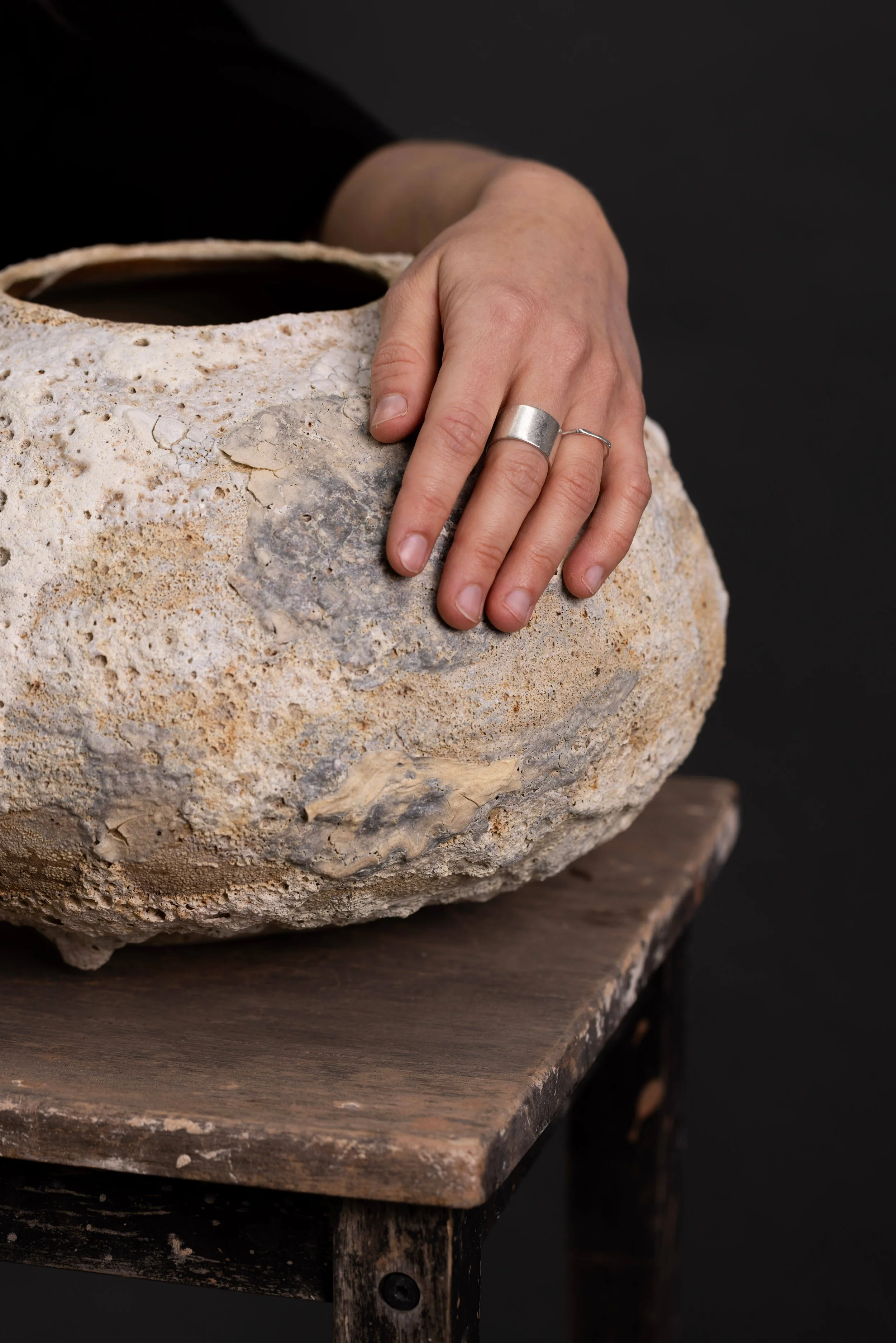
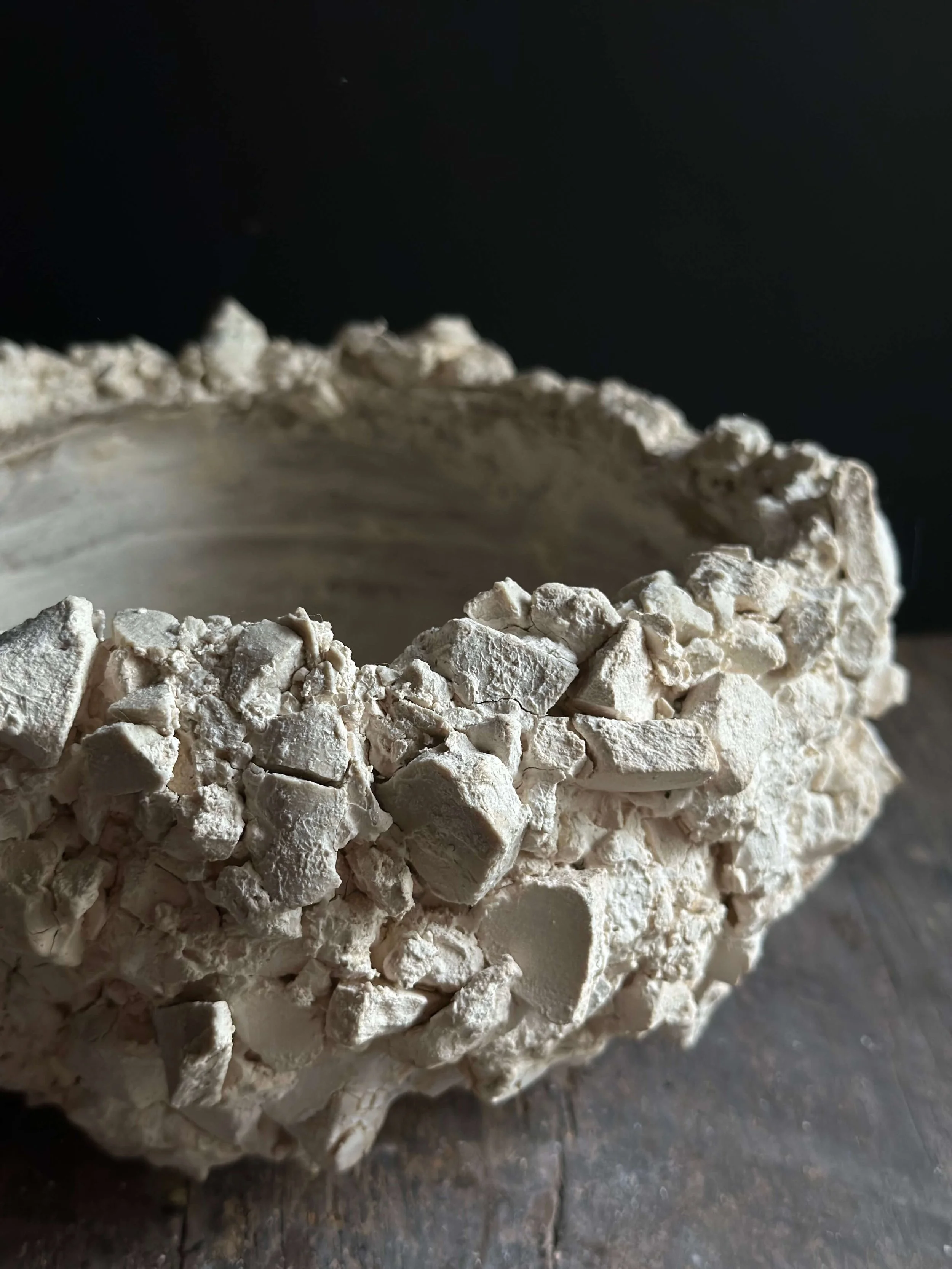
In the clay body, texture comes from what you add: coarse grog, sand, fired particles, foraged materials — even volcanic ash or sea rock ground fine. These materials interrupt the smoothness of commercial clay and leave a record of themselves in the fired surface. The result is something that looks and feels like it was shaped by geology rather than hands.
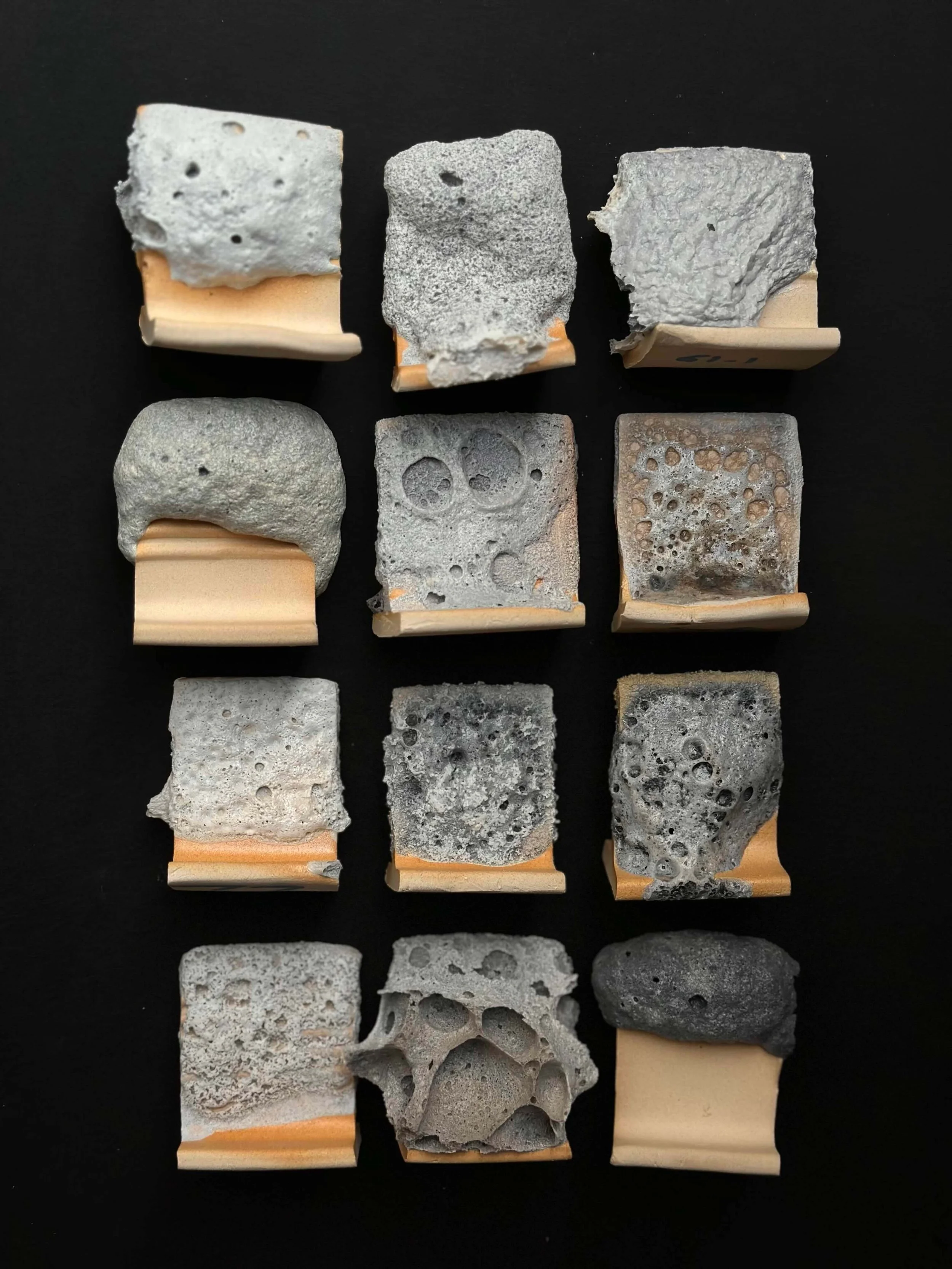
In the glaze, the story is different, and — for me — even more surprising.
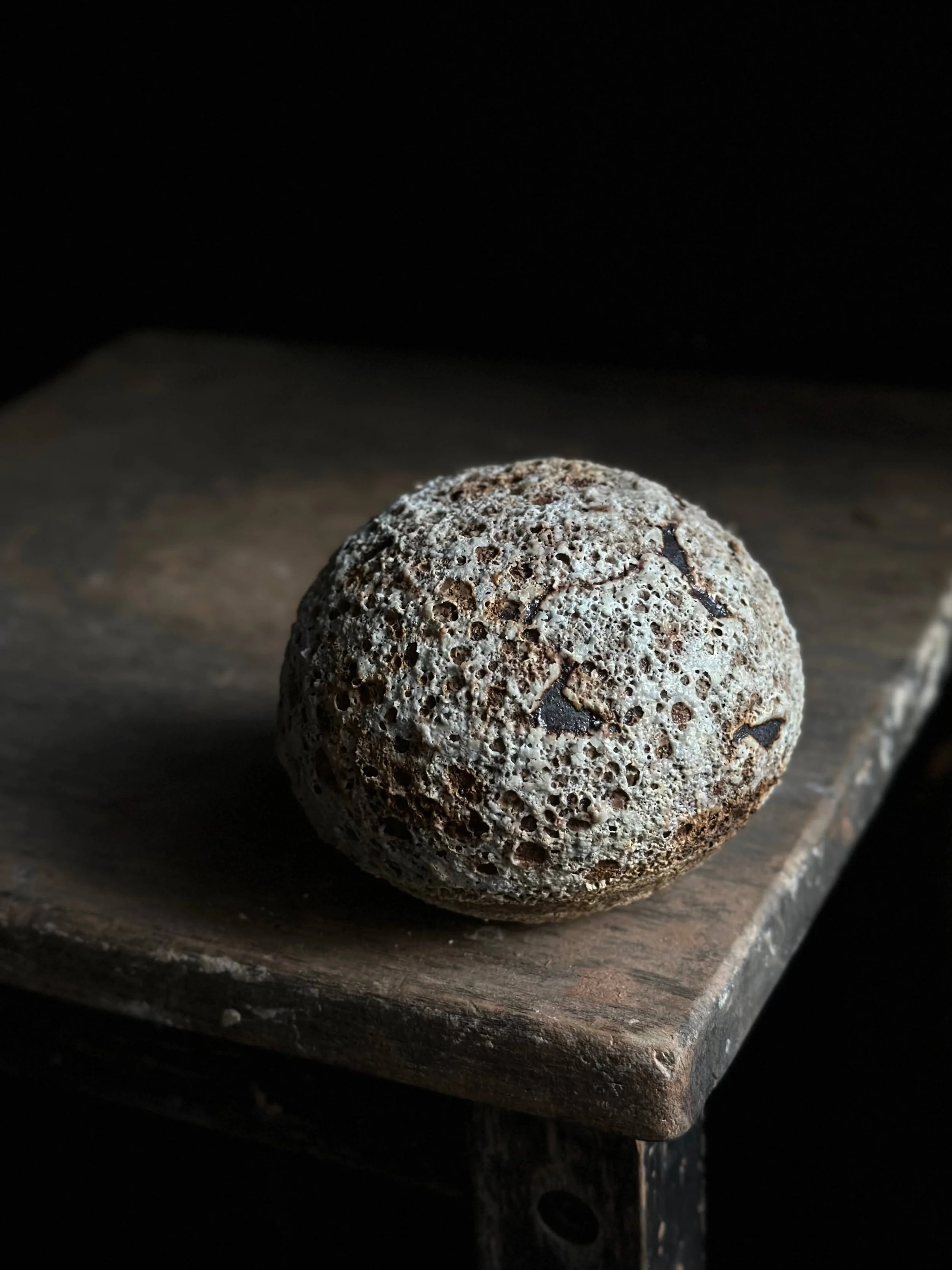
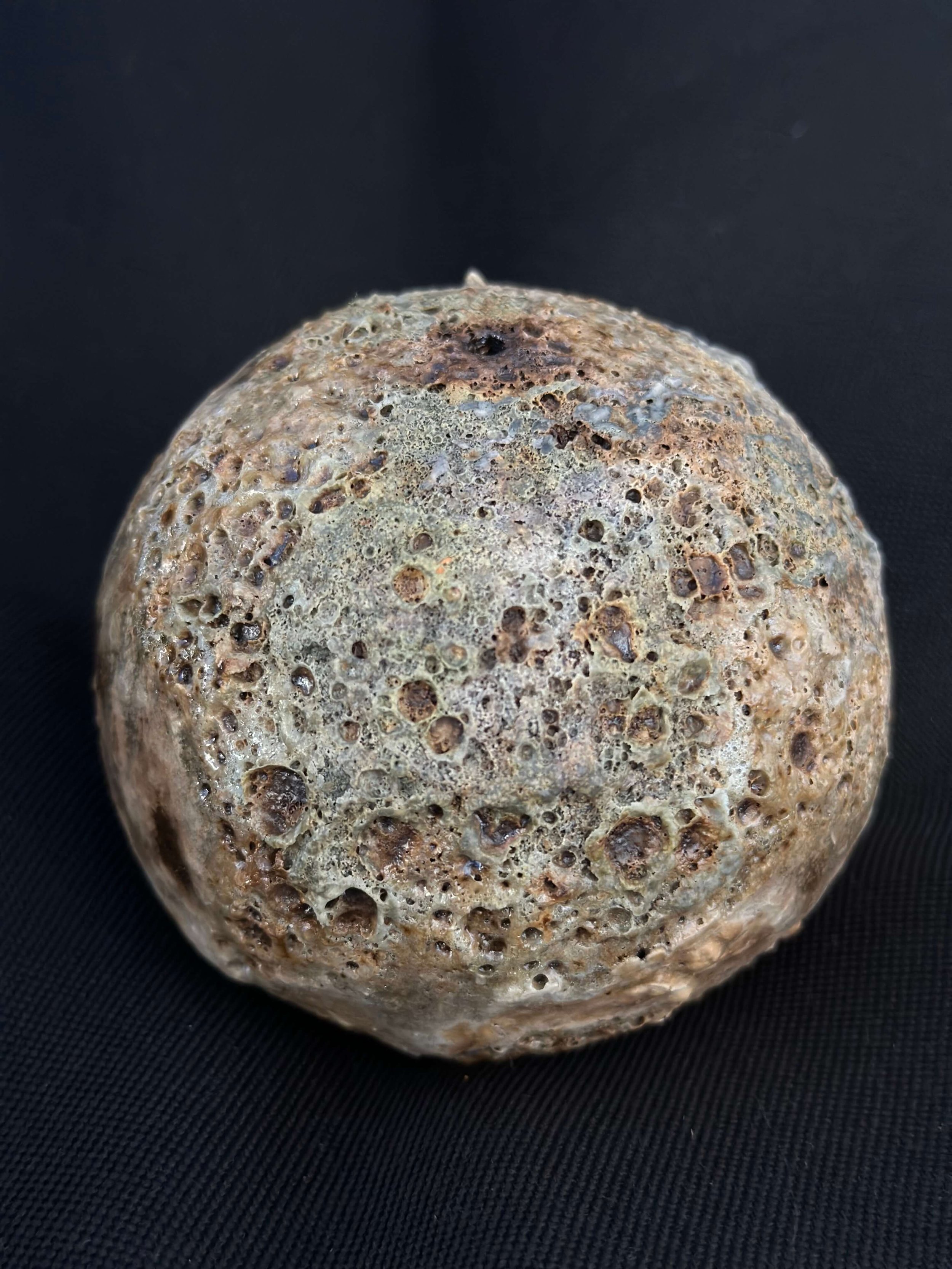
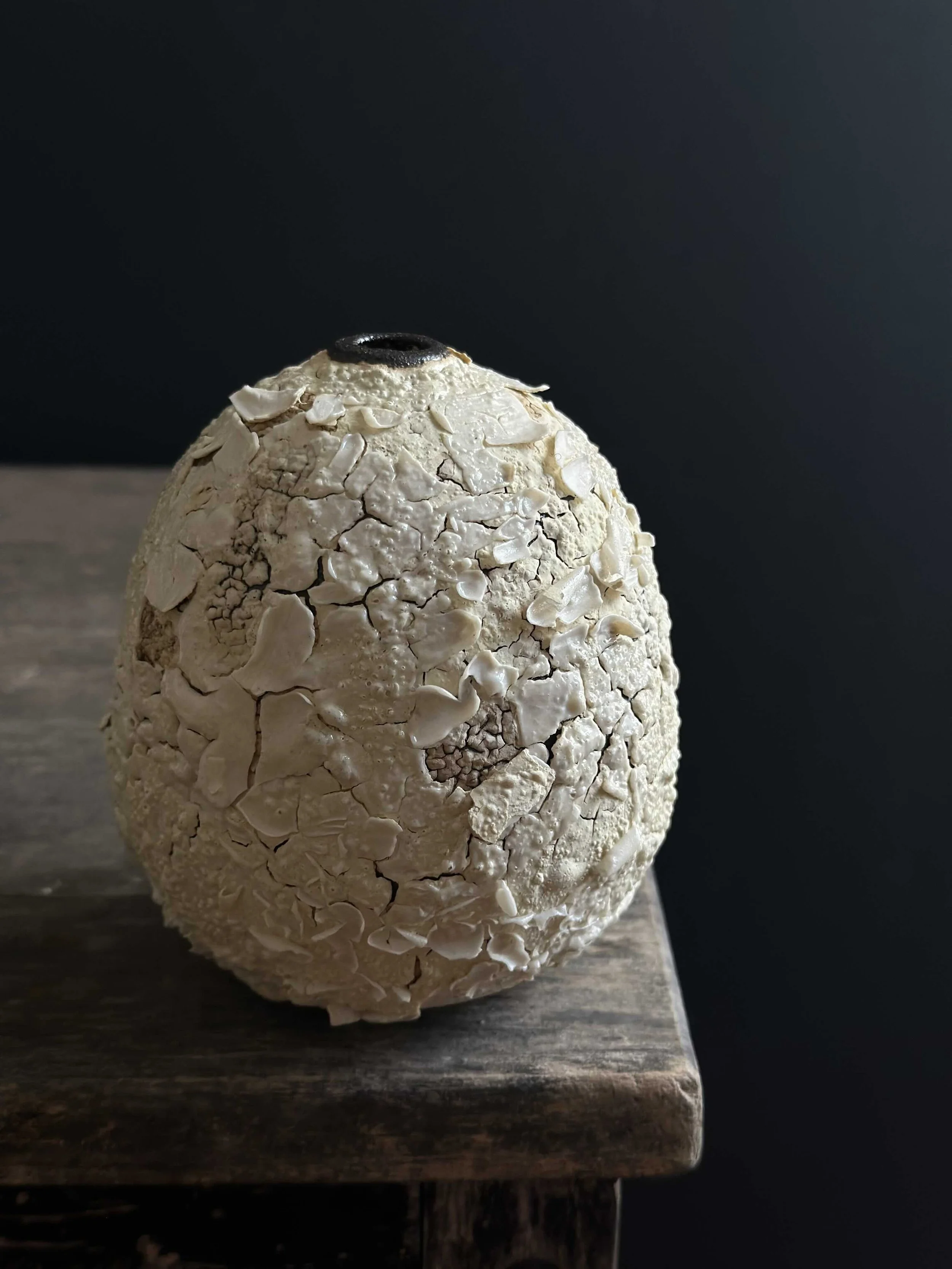
Some of the most extraordinary surface effects in contemporary ceramic art come not from traditional gloss glazes but from a category sometimes called special effect glazes: lava glaze, crater glaze, volcanic glaze, crawl glaze.
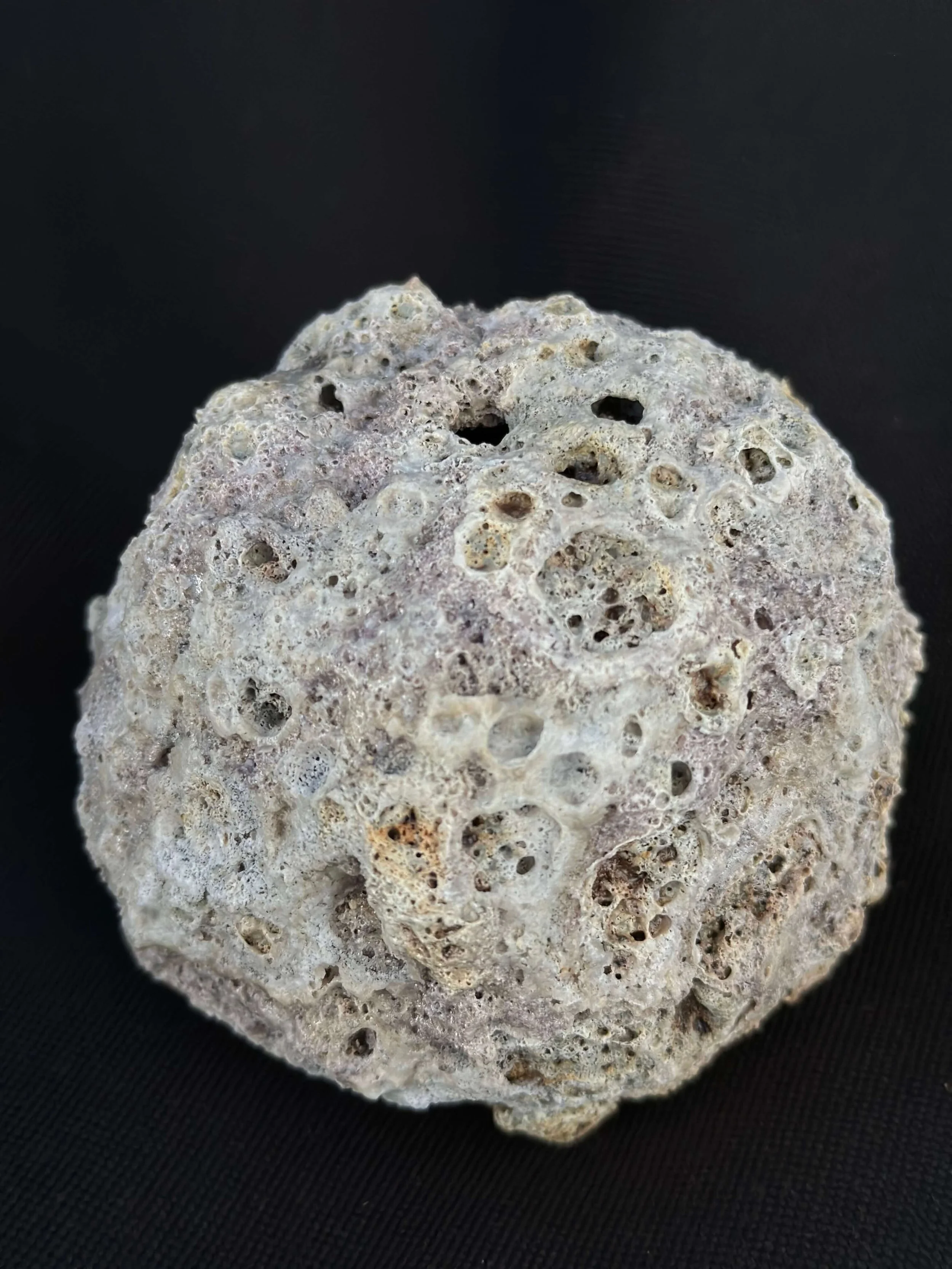
The most compelling textured glaze techniques don't produce a coating — they produce a geological event. They bubble, crust, and freeze mid-motion. Fired to cone 6, a ceramic lava glaze can look like lava rock, coral texture pottery, pumice, or the surface of a meteorite. It carries depth and shadow that a smooth glaze never could.
I knew exactly what I was attracted to long before I knew how to make it. The surfaces I wanted — rough, non-human, otherworldly — simply didn't exist in any commercial glaze range I could find. That gap sent me in the only direction left: deeper. I enrolled in glaze chemistry courses and began testing obsessively, which turned out to be far more scientific than artistic — methodical, repetitive, sometimes tedious. Pages of notes, hundreds of test tiles, incremental variables adjusted one at a time. Not romantic at all. But the results were worth every hour of it.
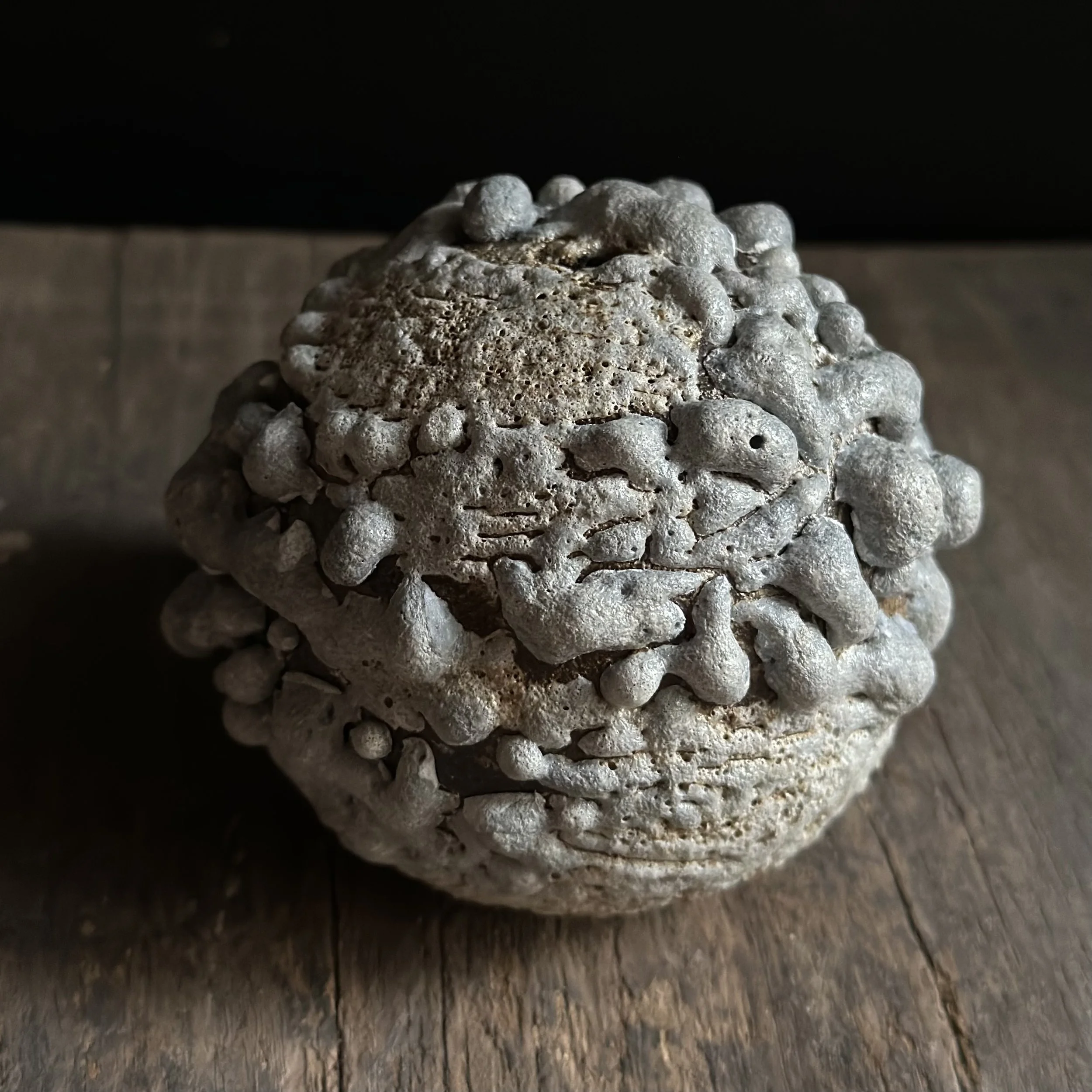
The key additive behind many of these effects is silicon carbide (SiC) — a material that releases gas as the glaze melts, causing it to bubble and crater as it cools. What you get from the kiln is never perfectly predictable. The temperature, the kiln atmosphere, the clay body, the thickness of application — all of it shapes the outcome. That unpredictability is not a flaw. It is exactly the point.

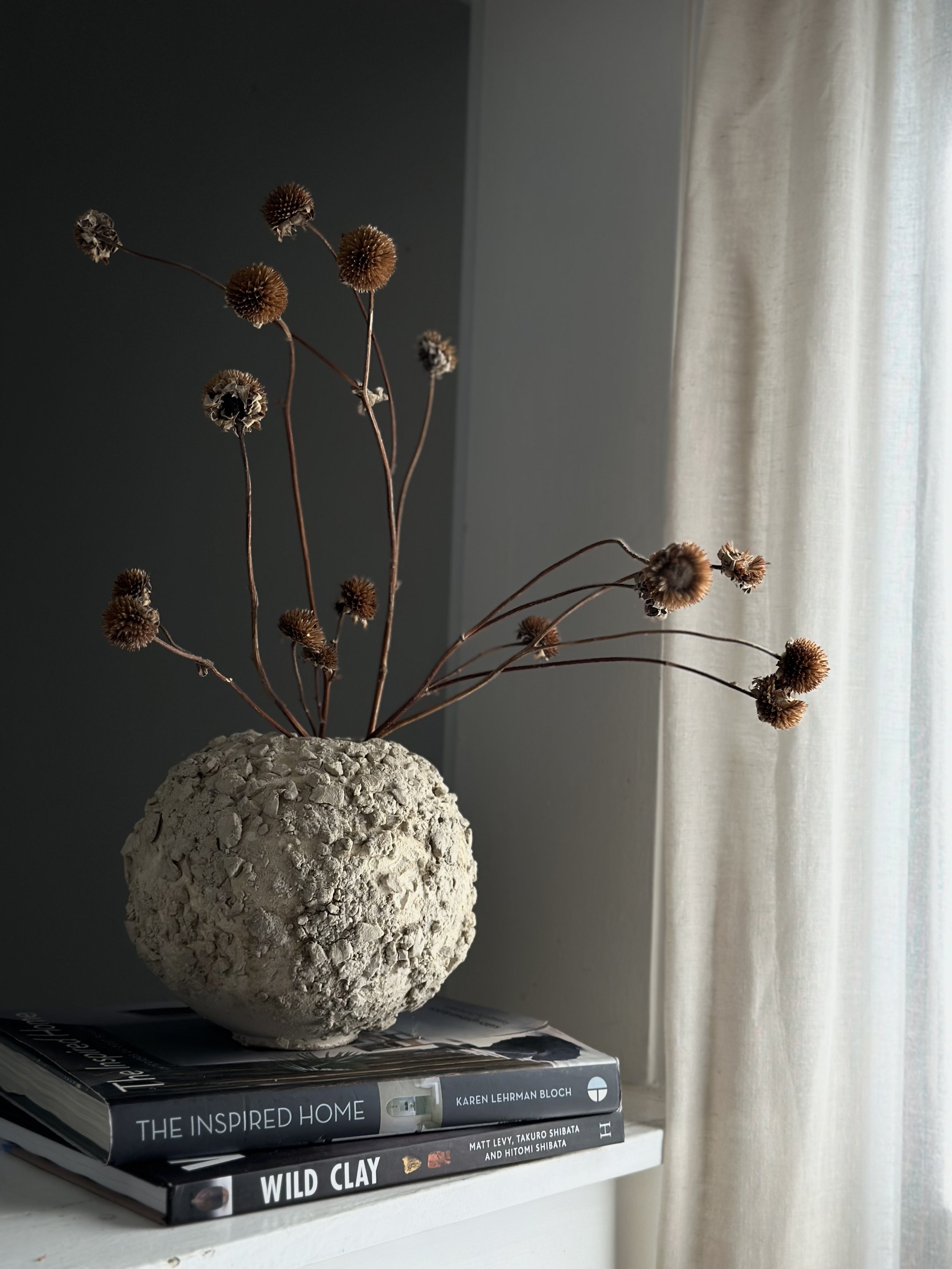
Ceramic textured vessel by Maria Loram
A Glaze That Looks Like the Ocean Floor
I've spent years testing these surfaces — working through hundreds of variables, running workshops in Lisbon and elsewhere, filling notebooks with results from kilns that ran too hot, too cool, too fast. Glaze chemistry and experimentation taught me patience, but it also became an outlet for my curiosity and creativity.
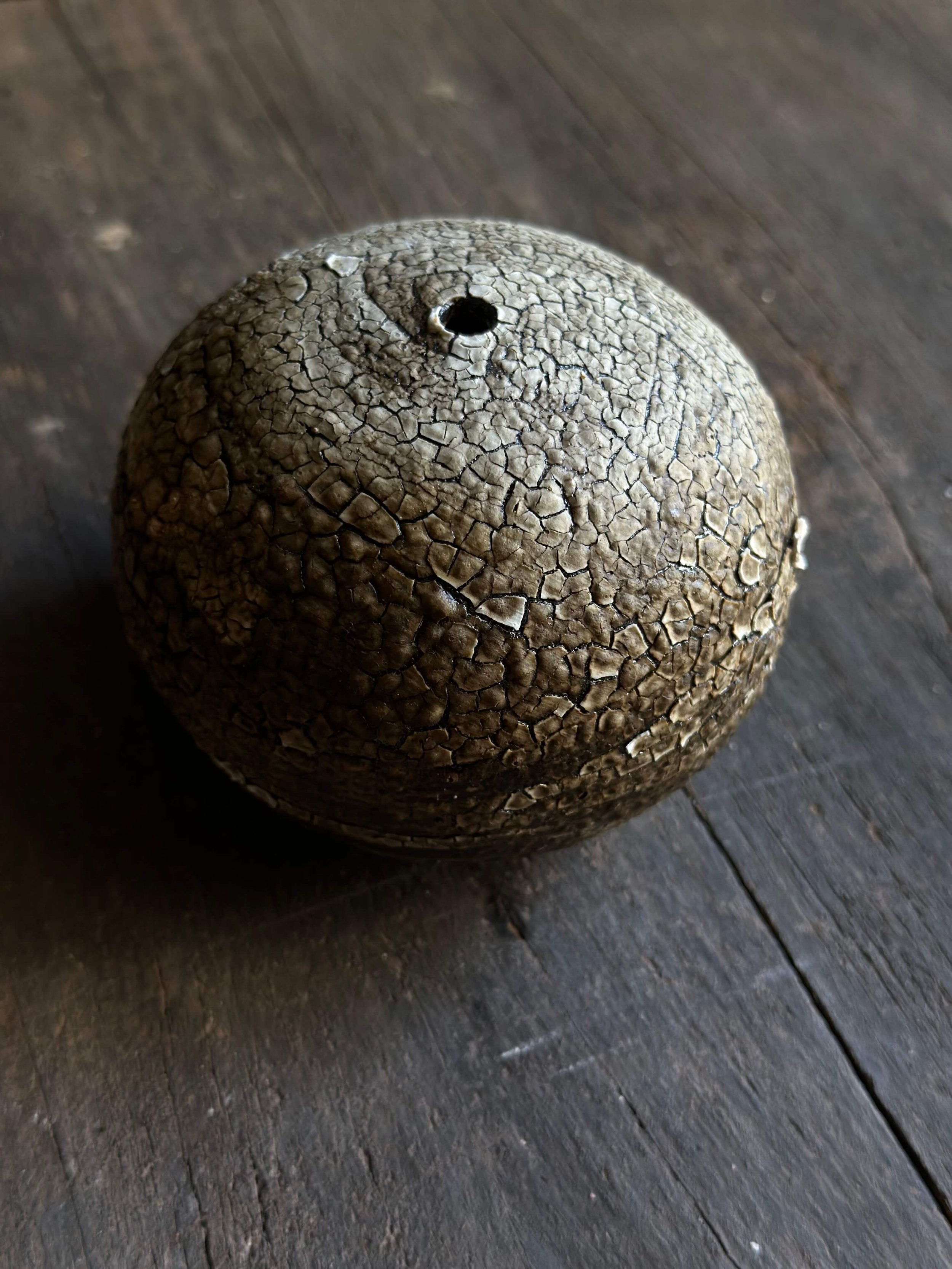
What I keep returning to is how naturally these surfaces read in a space. An organic ceramic vase with a lava glaze surface doesn't announce itself. It sits quietly and pulls you closer. It changes depending on the light — dramatic in morning sun, subtle by lamplight, almost liquid in shadow. It rewards the slow look in a way that almost nothing produced at scale ever does. This is the quality that makes handmade pottery with texture so different from anything manufactured: each unique pottery surface holds the record of a specific firing, a specific day, a specific set of materials that will never combine in quite the same way again.
For a long time, this quality was described as wabi sabi: the Japanese aesthetic of finding beauty in imperfection, transience, and the incomplete. Wabi sabi ceramics — rough, asymmetrical, unglazed or modestly glazed — have been part of Japanese tea culture for centuries. What we're seeing now in contemporary interiors is a wider, more global appetite for the same organic pottery aesthetic: objects that feel honest, that show their making, that don't pretend to be other than what they are.
Why Designers Are Drawn to These Surfaces
If you work in interior design or source objects for space, you already understand this intuitively. Natural texture does something to a room that smooth, reflective surfaces cannot: it absorbs rather than deflects. It grounds.
Nature-inspired ceramics have found a permanent place in the vocabulary of contemporary interior design — and it's not hard to see why. An organic ceramic vase with a volcanic or lava glaze surface draws the eye without dominating it. Grouped together, textured ceramic vessels create rhythm through variation — no two are identical, and that variation reads as generosity rather than inconsistency. Placed alongside natural materials (stone, linen, raw wood, dried botanicals), artisan ceramics with visible surface texture complete a material language that polished objects would interrupt.
The surfaces that are most sought after right now — in high-end residential design, in editorial ceramics, in the spaces that appear in design publications — tend to share certain qualities: they are handmade, they carry visible process, they suggest material weight, and they are not trying to look like anything other than what they are. What some designers call minimalist textured pottery, others simply call honest objects.
Earthy ceramics. Stone-like pottery. Organic-shaped vessels. Rough, porous, matte. These are not trend descriptors — they are descriptions of objects made in relationship with material, fire, and time.
What These Pieces Are — and What They're Not

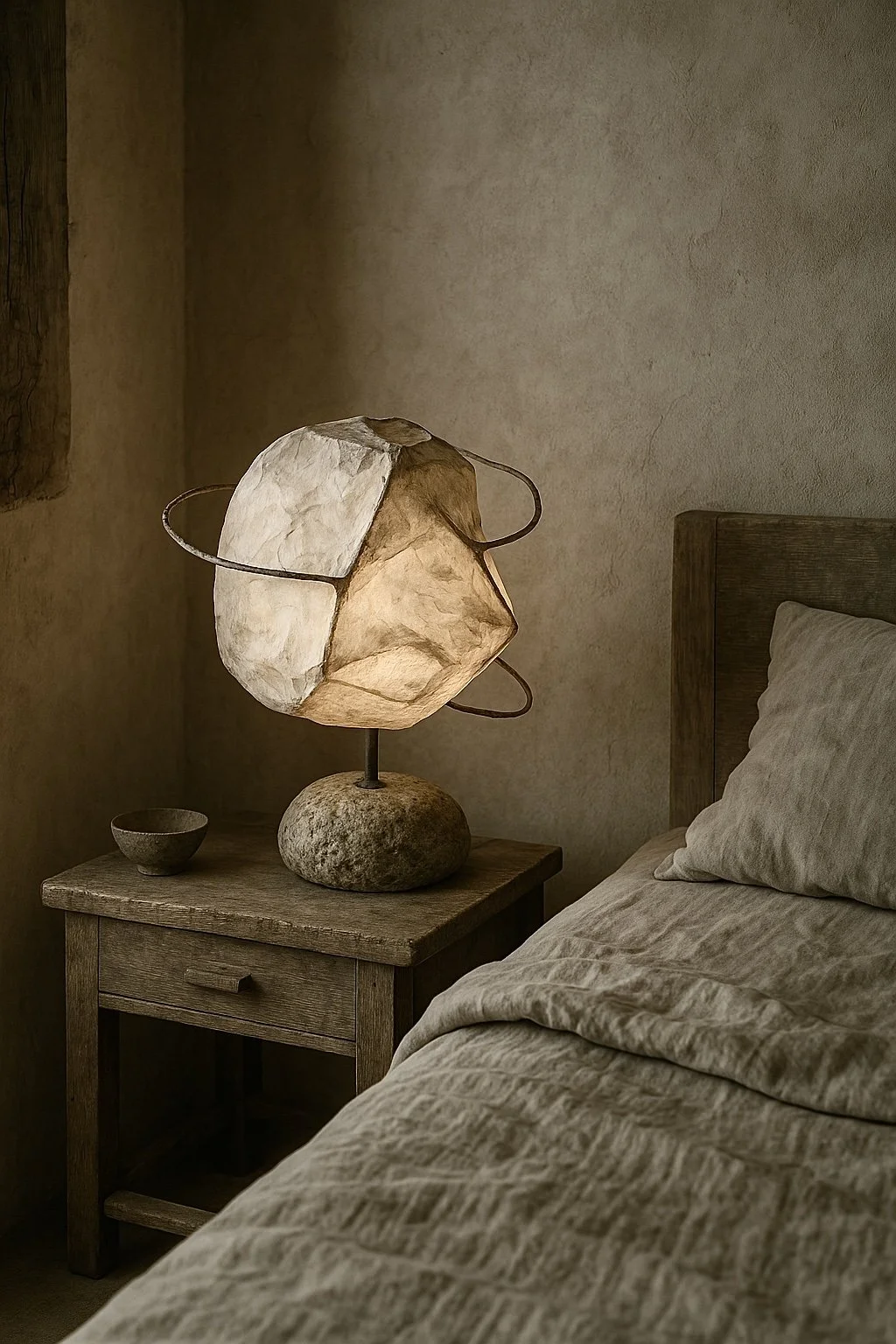
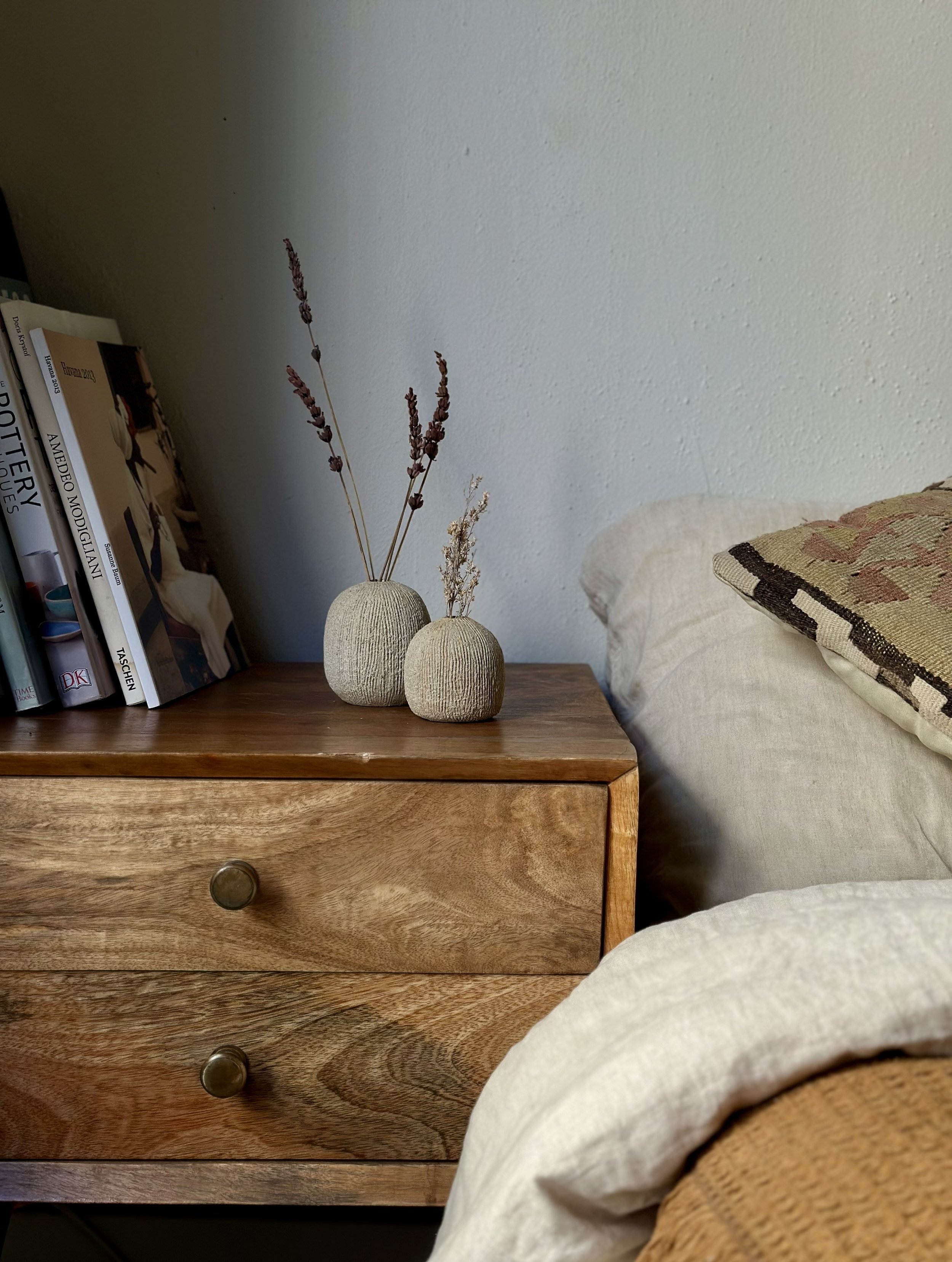
A collection of ceramic bud vases
To be clear about what these surfaces are, it helps to be equally clear about what they're not.
Lava glaze, crater glaze, and the other textured special effect glazes used in my work are non-functional. They are not food-safe. They are not designed for everyday use at a table. They are decorative ceramics — sculptural vessels, unique ceramic art objects, pieces made for space rather than function.
This is not a limitation. It is a different intention.
The traditional rules of ceramics — stable glaze, proper melt, food safety — exist for a reason, and they matter in the right context. But decorative and sculptural ceramic art doesn't have to follow them. Some of the most interesting ceramic surfaces in existence today exist precisely because someone decided to fire differently, apply differently, or use a material that had never been tried in a glaze before.
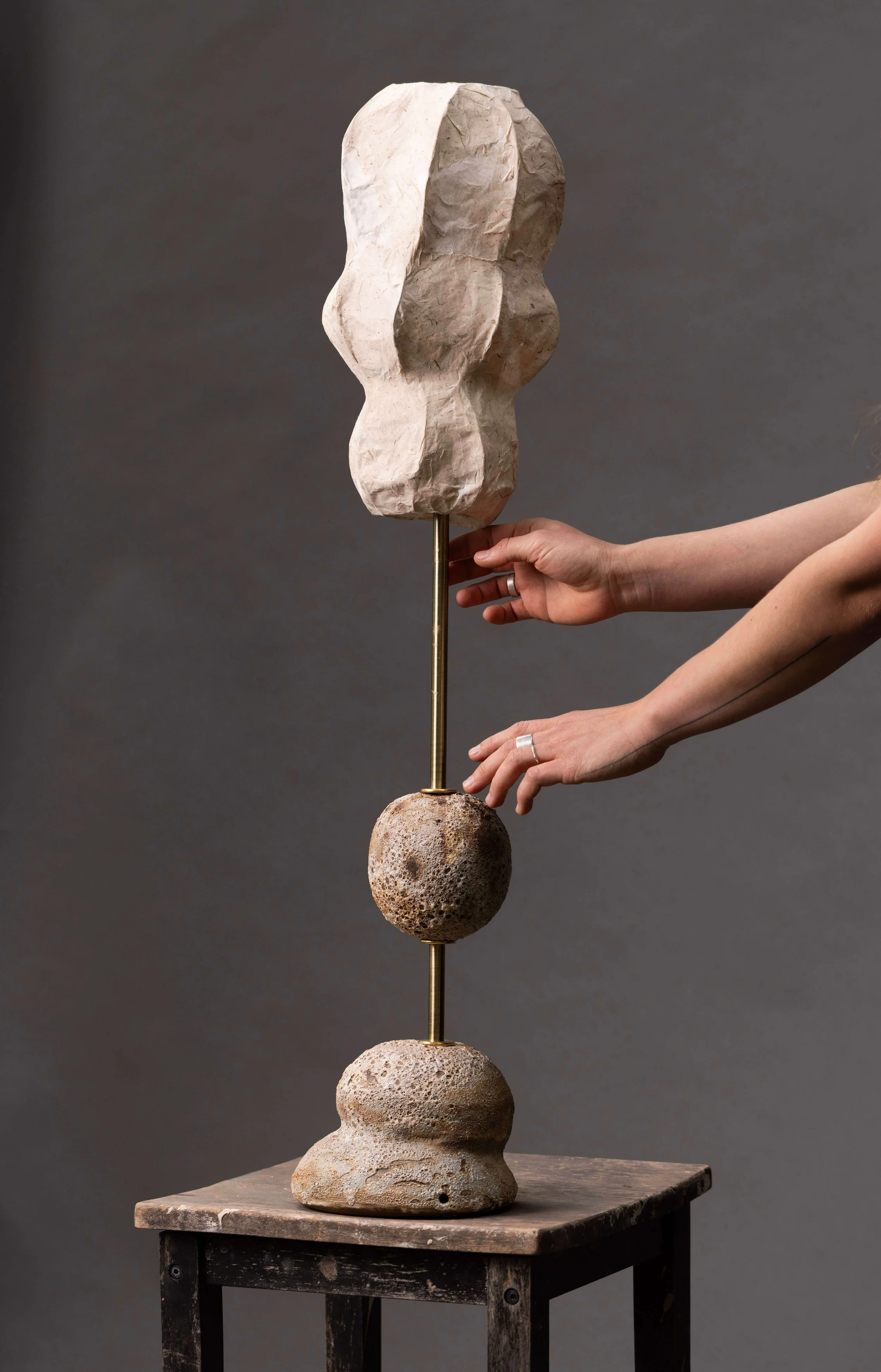
These are one of a kind ceramics — for the collector who wants ceramic art for home that feels genuinely unusual. For the designer who needs a textured ceramic vessel that does something a mass-produced object never could. For anyone who wants to bring a surface that looks like it was shaped by the ocean, the volcano, or a slow geological process — into a room that otherwise moves very fast.
Where to Go From Here
The ceramics I make are available through commissions — each piece made to order, each surface unrepeatable. If you're a designer or collector looking for a specific scale, form, or texture quality, I'm always open to conversations about what's possible. Reach me at maria@loramceramics.com.
If you're a ceramic artist and you want to understand how these surfaces are made — not just what they look like — I teach two courses that cover exactly this:
Textures in Ceramics is an 8-week online ceramics course covering the full range of natural texture techniques — from clay body additives (sand, grog, foraged materials) through to lava glaze and special effect glazes. It's the right starting point if you want to learn how to add texture to pottery and build a complete vocabulary of ceramic surface decoration.
The Glaze is Lava is a focused 6-hour online ceramics course on lava glaze, crater glaze, and silicon carbide-based special effect glazes specifically — covering the variables, the troubleshooting, and the method behind repeatable results.
And if you want the lava glaze recipes themselves — my monthly experiments, test results, and glaze formulas straight from the kiln — those live on my Patreon.
What surfaces are you drawn to right now? I'd love to know — leave a comment below or find me on Instagram.
About the Author
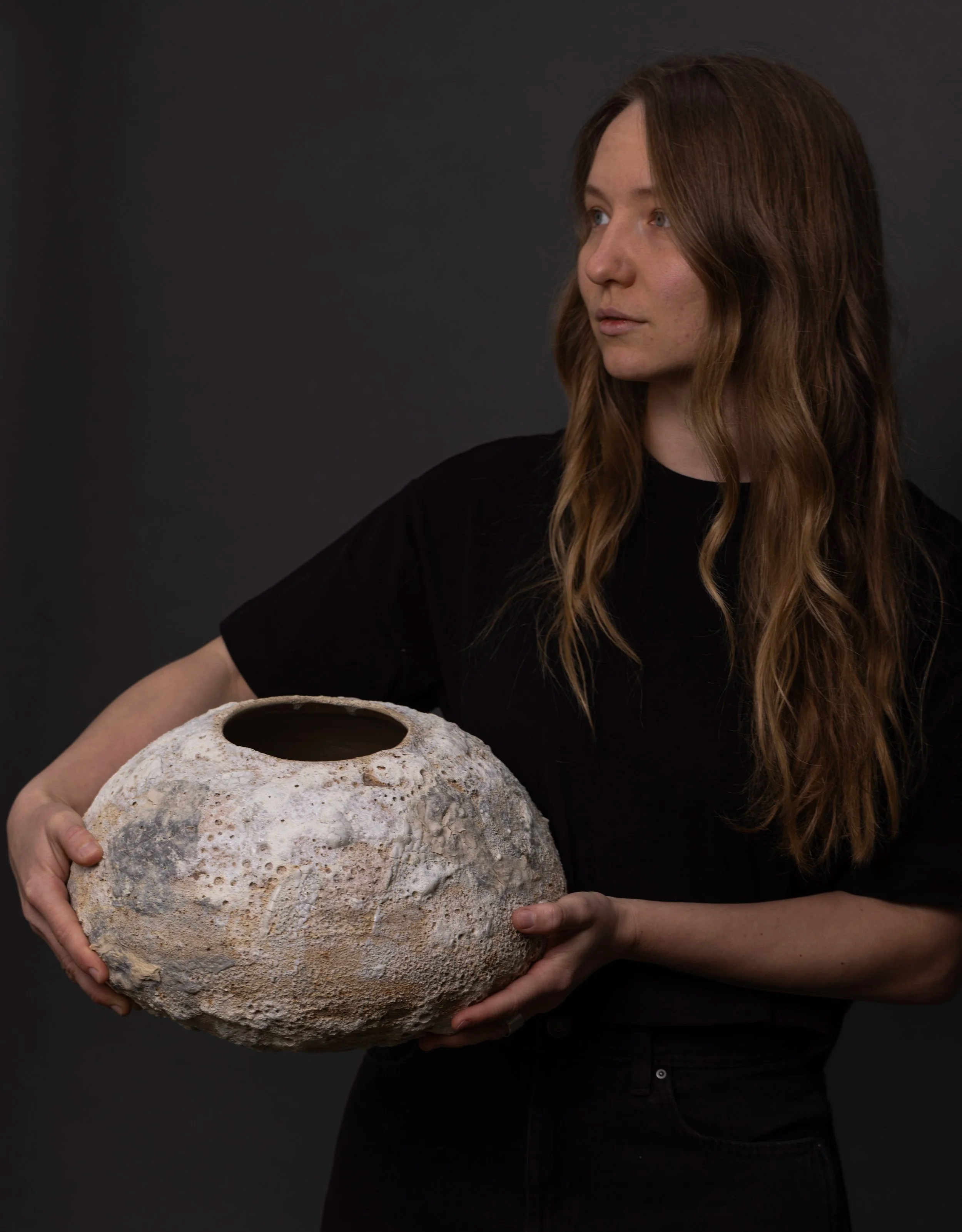
Hi, I’m Maria — a ceramic artist based in the US. I make sculptural lighting and hand-built vessels, and I share my studio process online.
I teach ceramics internationally and online. → loramceramics.com