Selling Ceramics at Craft Markets: What Actually Works
I've made $3,000 at a market in a single weekend. I've also packed up an entire booth, driven home exhausted, and done the math to realize I made less than minimum wage for my time. Craft markets were one of the first places I sold ceramics — and I've done almost everything wrong at least once. Wrong market, wrong inventory, forgot to charge my phone.
If you're a beginner ceramic artist thinking about selling at markets, here's what I genuinely wish someone had told me before I started.F
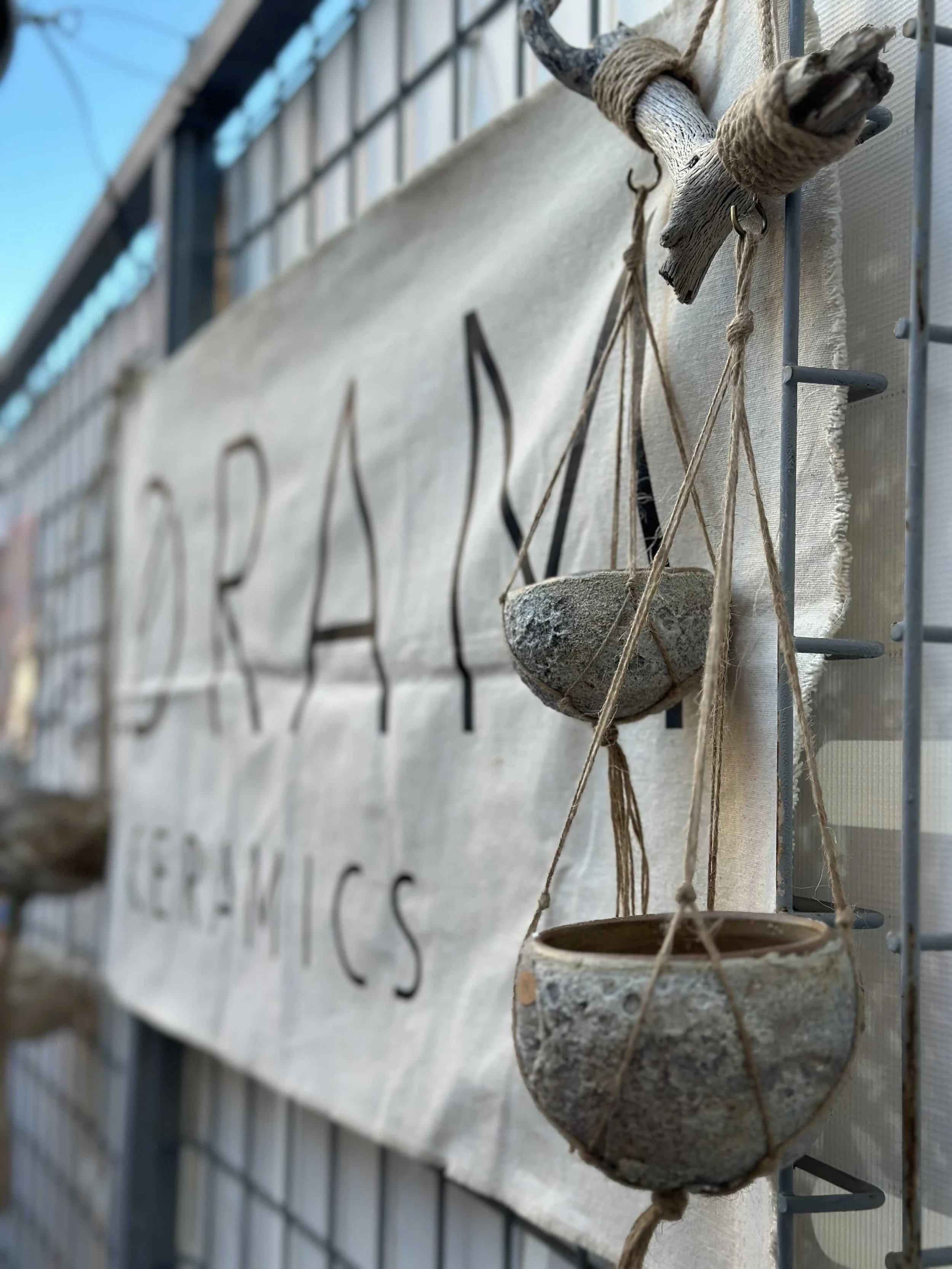
Are Craft Markets Right for You?
The short answer is: probably yes, at least to start. Markets are one of the few places where you can put your work in front of real humans, watch them pick things up and put them down, listen to what they say, and learn more about your audience in three hours than you'd learn from months of posting online. That alone is worth something, separate from whatever you earn.
But markets are not passive income. They are physical, time-consuming, logistically complicated events. And the ceramics market world has a wide range — a local farmers market, a juried craft fair, and a design fair are completely different events with different customers, different price tolerances, and wildly different fees. Treating them as the same thing is one of the most common beginner mistakes.
My honest take: markets are worth doing early, even if the math doesn't work perfectly at first. You're learning what sells, building confidence, and getting your work seen. But go in with clear eyes — not every market is a good market for your work, and figuring out which ones are worth your time is itself a skill.
How to Research a Market Before You Apply
This step is where most beginners skip ahead too fast, and it's where a lot of disappointment comes from.
Before applying to any market, go to their Instagram and look for videos from previous events. You're not looking at aesthetics — you're looking at foot traffic. How many people are actually there? A market with beautiful photography but empty walkways is a red flag. A busy, crowded, slightly chaotic market is usually a much better sign.
Also pay attention to what the market is known for. I once did a market with genuinely good foot traffic and sold almost nothing — because people had come for the food. It was a food market that happened to have art vendors, and most visitors walked past us straight to the food stalls. Foot traffic without the right intention is not useful foot traffic.
A few other things worth checking: look at who's already selling there and at what price point. Do your pieces match the aesthetic? Are there already fifteen other ceramicists, or would you stand out? The goal is to be similar enough to fit the vibe and different enough to be interesting.
The single best research you can do is go to the market yourself as a visitor before you ever apply. One hour walking around as a customer will tell you more than any website or Instagram deep-dive. You'll see how it actually feels, who's buying, what's moving, and whether your work belongs there.
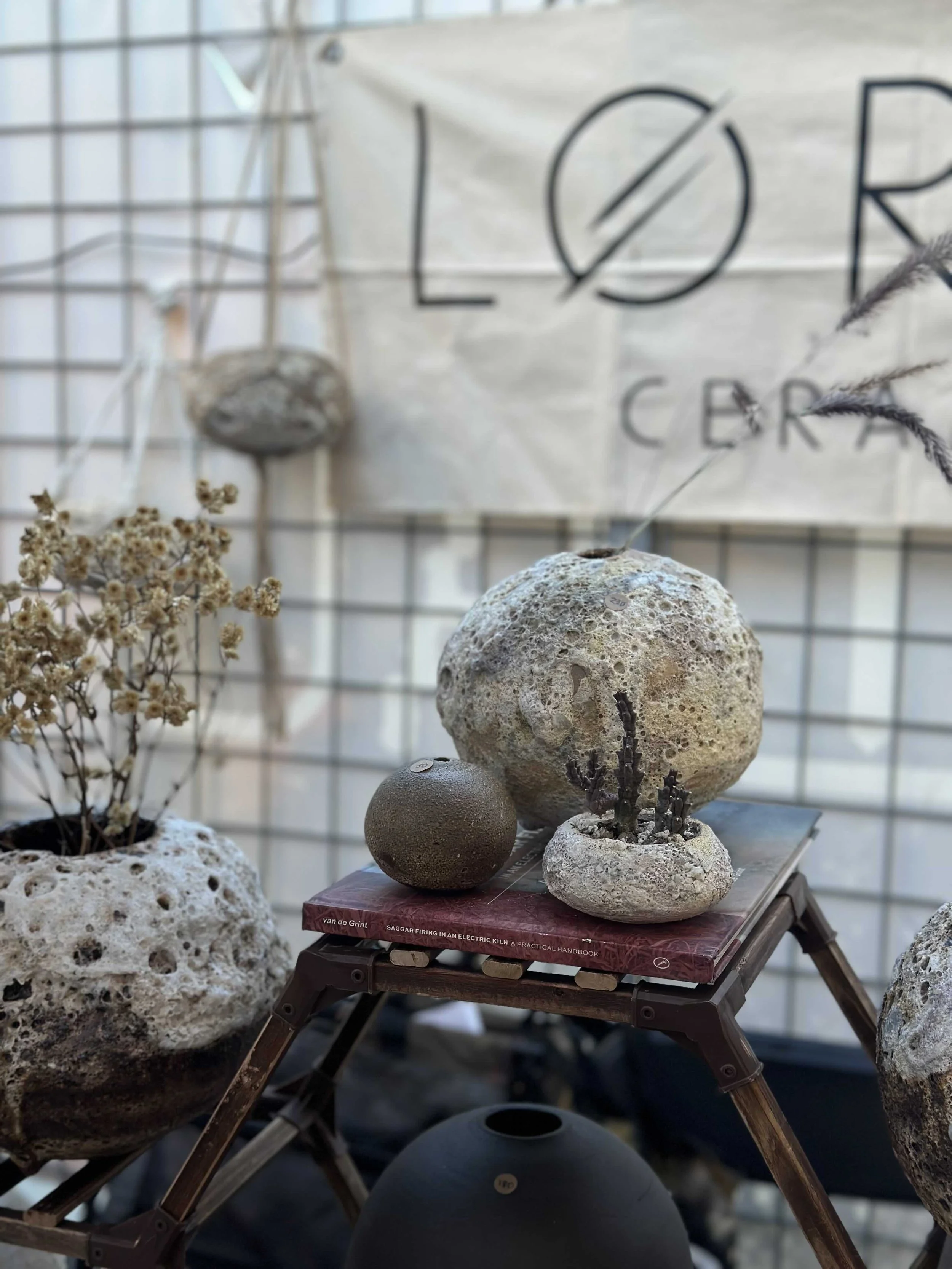
Market setup
What to Bring: Inventory and Pricing
Your favourite pieces are often not your bestsellers at markets. This is something most ceramic artists have to learn the hard way.
At most craft and arts markets, the $25–60 price range moves fastest. Functional items sell. Small items sell. Things people can justify buying on impulse and physically carry home sell. A beautiful large vessel that represents your best work is unlikely to find a buyer in a market context — not because it isn't good, but because market buyers are usually impulse buyers, not planned buyers.
That said, don't leave your hero pieces at home. Bring a few statement pieces that stop people at the aisle — pieces that show your aesthetic at its most ambitious. You probably won't sell them, but they do the job of pulling people in, and once someone's standing at your booth, they'll find the smaller things they can actually afford. The strategy is: hero pieces to attract, accessible pieces to sell.
Pay attention to what people pick up. What do they put down immediately? What do they hold for a long time before putting back? What question do they keep asking? This is real product research, and you're not going to get it anywhere else. The market is giving you data — collect it.
Applying: Photos, Timing, and What Jurors Actually Look At
Apply early. The best markets fill spots quickly, and applying ahead of time signals that you're organised and serious. More importantly, it gives you the best shot at getting in before the cohort is full.
Your application photos matter more than your artist statement. Jurors are looking at your work and deciding whether it fits their market — and they're doing it fast, across hundreds of applications. Use photos that show your work clearly on a clean background, and also photos that show it in context: on a table, in a home, styled the way your customer would actually use it. If your Instagram or website is strong, include it. It makes you look like a professional, which is exactly what you want them to think.
If you get rejected, ask for feedback if the market offers it. Rejection from a juried market often isn't about the quality of your work — it's about cohort balance (too many ceramicists that year, or they needed a different aesthetic). The feedback is worth having. Apply again.
Booth Setup: The Details That Actually Matter
A well-set-up booth doesn't just look nice — it actively helps you sell. Here's the version I'd give a beginner:
Get your work off the table and at eye level. Use risers, crates, small shelving, anything that creates height variation. Work that's all laid flat on a table is harder to see and easier to walk past.
Edit ruthlessly. Don't put out everything you've ever made. A curated booth looks more valuable and is less overwhelming. Your most striking piece goes at the highest point or the front — it's a flag that stops people walking past.
Price every single item visibly. People will not ask for a price. If something isn't labeled, most potential buyers will just move on. Every unlabeled piece is a missed sale.
Bring everything you need to take payment: Square reader, Venmo, Zelle, and enough cash to make change. Charge your phone the night before. Charge your payment device. Bring bags for purchases and wrapping for fragile pieces — nothing loses a sale faster than a customer wondering how they're going to get something home safely.
Have your Instagram handle visible from the aisle — not just on a business card but on a sign people can read while walking past. You'll gain followers from people who see your work and don't buy that day. Those people sometimes become buyers later.
Collect emails. A simple handwritten sign — "Join my list for new work and studio updates" — with a QR code to a signup form is enough. Ask directly when someone buys: "Would you like to be on my list? I do small drops a few times a year." Most people say yes.
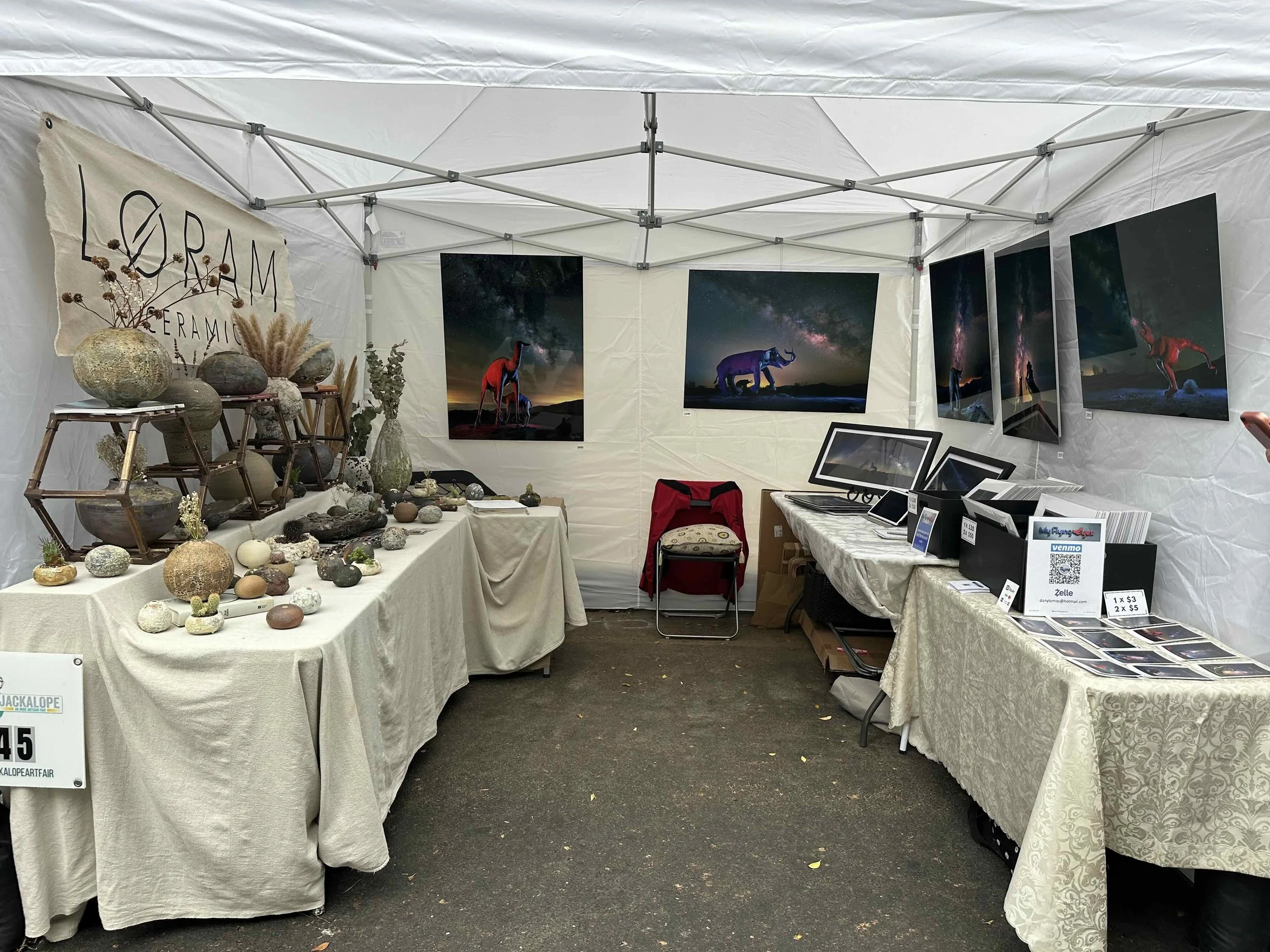
Jackalope Art Fair, Pasadena
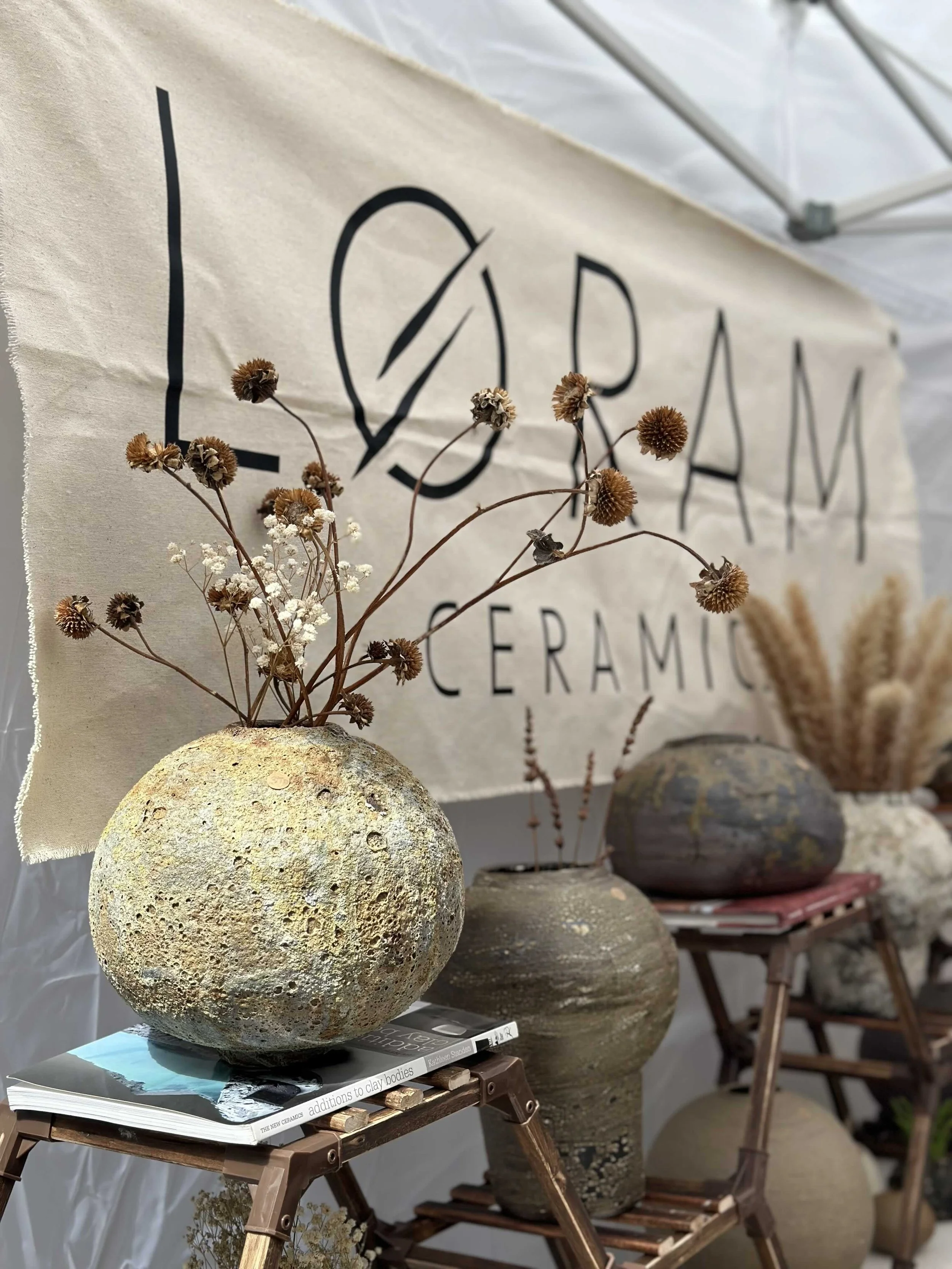
The Math
Here's something worth sitting with before your first market.
Take a day where you made $500 in sales. Subtract a $200 booth fee. Subtract $40 in travel. Then count your hours: setup, the market itself, breakdown, travel both ways. Ten hours is probably conservative. At even $20 an hour, that's $200 more gone. You've netted $60.
This doesn't mean markets aren't worth doing. But it means going in knowing what you're actually making — not just what you take from the cash box at the end of the day.
The non-financial return is real: new email subscribers, Instagram follows, a conversation with a potential wholesale client, a customer who comes back every year. Factor those in honestly. A market that breaks even financially but adds 40 people to your email list might have been one of the best investments you made that month. A market that feels lucrative but leaves you with nothing to show for it beyond the cash is harder to justify.
What to Do After the Market
This is where most ceramic artists drop the ball. You come home exhausted, you collapse, and a week later you've lost all the momentum you built.
The week after the market is when the follow-up actually matters. Send an email to your list — share a photo from the market, mention what sold out, tease what's coming next. Follow up with anyone who mentioned a commission or seemed genuinely interested. Even a twenty-minute admin session a few days after makes a real difference to what happens next.
Then do the analysis. What sold fastest? Make more of that before the next one. What didn't move at all — and why? Wrong market, wrong price point, wrong audience? Update your inventory so you always know what you have, what sold, and what's sitting. Post a recap on Instagram. It performs well and shows that your practice is active.
Ask yourself honestly: was it worth it? Did you make money? Did you make new connections? Did you learn something useful? Did you enjoy it? If any of those answers is yes, it probably was — even if the math didn't fully work out this time.
When to Keep Going, When to Move On
Markets are a genuinely great place to start selling ceramics. Some ceramicists build their whole business around them and never need anything else. Others — like me — reach a point where the price point of their work and the audience they're trying to reach doesn't quite fit the market format anymore, and they move toward design fairs, showrooms, or direct collector relationships.
Neither is better. It's just about matching where you are with what works for your work right now.
If you're just starting out: go to markets. Test your inventory. Talk to customers. Build confidence. Learn what sells and why. The lessons you take out of even a mediocre market day are worth more than they feel like at the time.
If you've been doing markets for a while and they consistently don't work: that's useful information too. It might be the market, the inventory, the booth setup — or it might be that your work has grown past what a general craft market audience is looking for. Figuring out which one is part of building a ceramics practice that actually lasts.
Thinking About Building Your Ceramics Business?
This is the kind of breakdown I wish someone had shown me when I was starting out. If you're a ceramic artist working on the business side — pricing, fairs, expenses, building a sustainable studio practice — I'm planning to offer 1-1 mentorship sessions in the future. Drop me an email at maria@loramceramics.com and I'll let you know when spots open.
In the meantime, if you want to develop your technical ceramic skills alongside the business side, I teach two online courses: Textures in Ceramics covers surface decoration from natural materials to lava glaze, and The Glaze is Lava goes deep on volcanic and crater glaze effects.
Go Deeper
If you want to build the technical foundation that makes it all possible that's exactly what I cover inside my courses:
Textures in Ceramics — an 8-week course building a real vocabulary of ceramic surface technique, from natural materials through glaze chemistry.
The Glaze is Lava — my deep dive into lava glazes, crater glazes, and special effect surfaces.
And if you want the ongoing material — recipes, test results, behind-the-scenes from my own business — that's what my Patreon is for.
About the Author
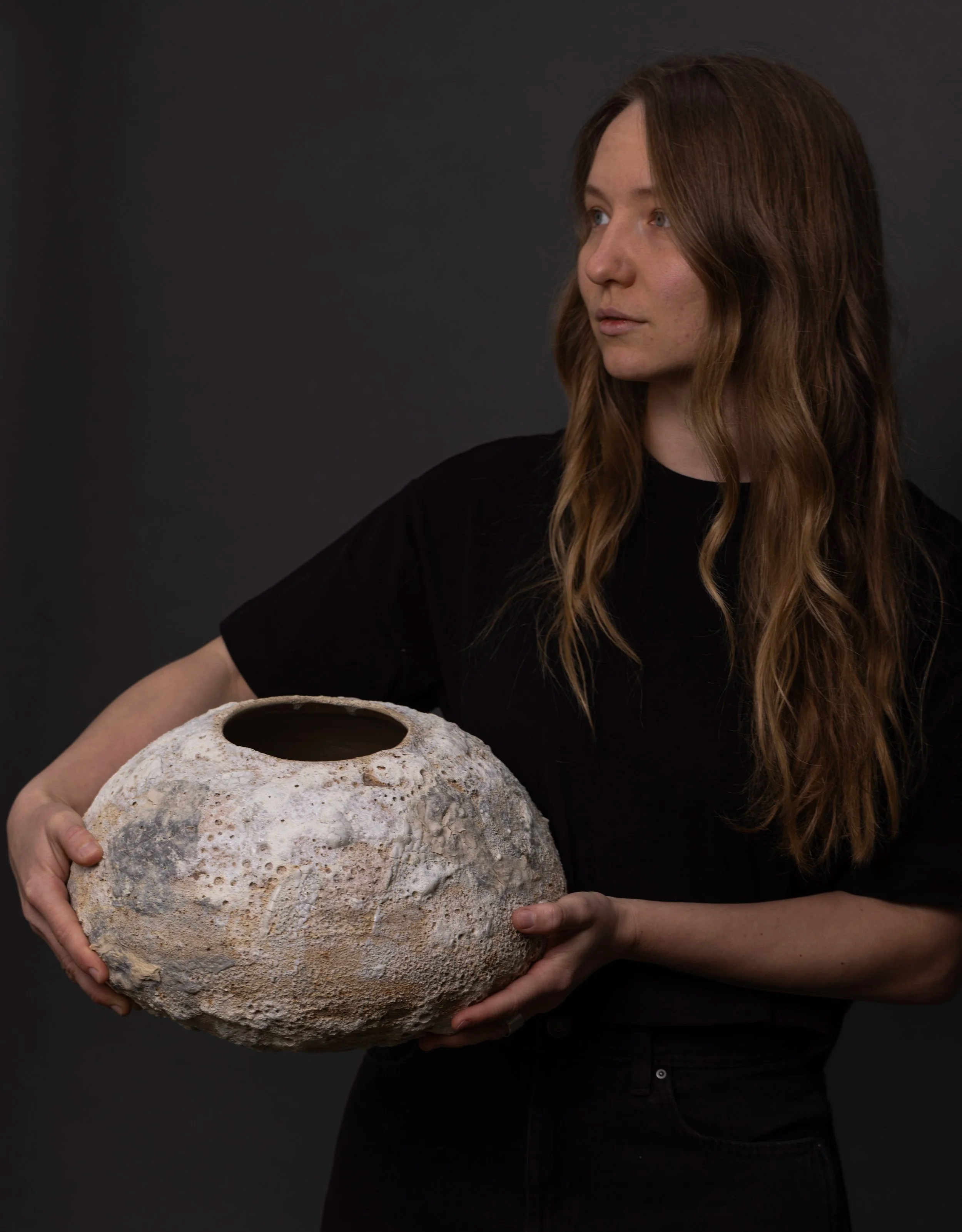
Hi, I’m Maria — a ceramic artist based in the US. I make sculptural lighting and hand-built vessels, and I share my studio process online.
I teach ceramics internationally and online. → loramceramics.com
This checklist is part of a growing library of free guides for ceramic artists and makers.