How the Type of RO Flux Changes Lava Glaze Texture
If you've been following along with my glaze reviews, you know I'm obsessed with lava glazes and all the variables that make them do interesting things. Mesh size, water content, flux ratios — each one shifts the result in a different direction. This one is about something I find particularly fun: what happens when you keep the whole recipe the same and just swap out which RO flux you're using.
It sounds like a small change. It is not a small change.
What Is an RO Flux?
A quick note for anyone newer to glaze chemistry. Fluxes are the materials in a glaze that help it melt. RO fluxes sit in the second column of the periodic table — calcium, magnesium, barium, and strontium all have a positive two charge, meaning they each require exactly one oxygen. Zinc behaves similarly and is generally grouped with them, even though it technically lives elsewhere on the periodic table.
In most functional glaze chemistry, these fluxes are used in combination. But in special effect glazes like lava glaze and crawl glaze, the specific flux you choose has a dramatic effect on the surface character — not just how much the glaze melts, but what kind of texture it produces.
Two Sets of Tests — Same Recipe, Different RO Fluxes
I don't work with just one test. I've run this particular experiment across workshops in different countries — Bali and Lebanon — and the results are consistent enough to say something useful, while still being surprising in the details.
Both test sets were silicon carbide-based lava glazes, fired at cone 6, with no colorants added. I intentionally leave the color out because it's distracting — I want to see the surface, not the pigment.
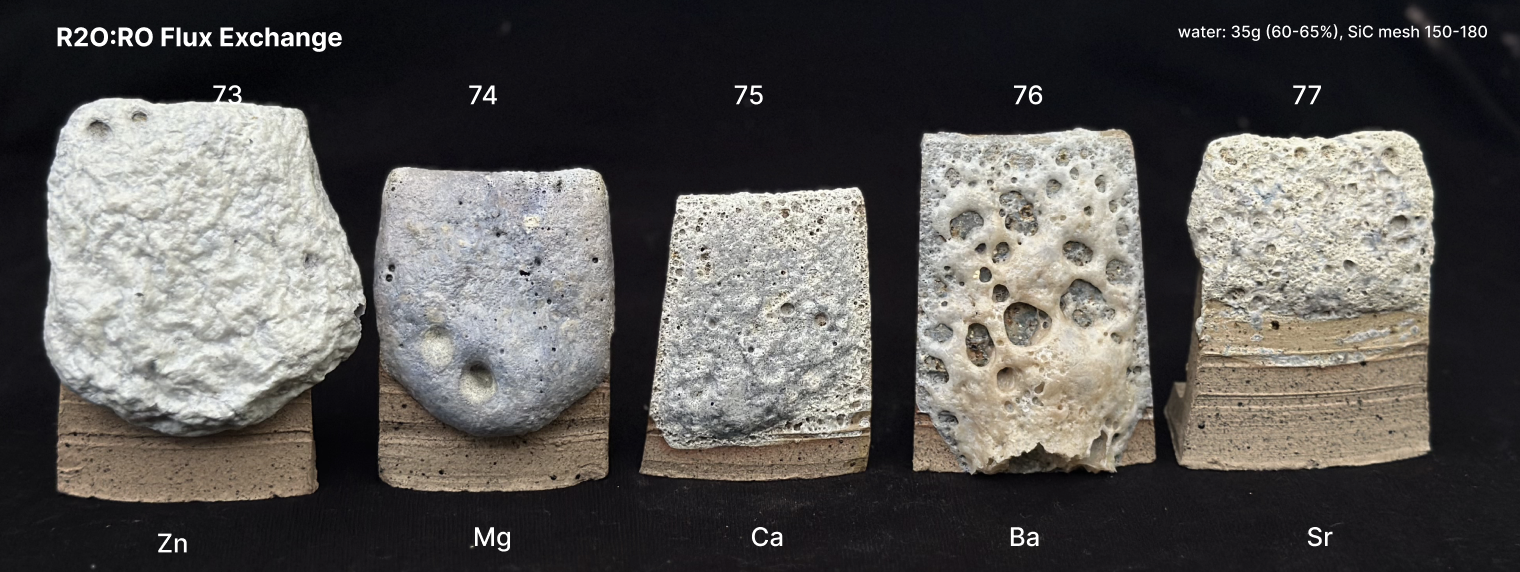
Lava glaze test tiles showing various effects based on the main flux— ceramic texture experiments, Loram Ceramics workshop Bali
Zinc is immediately recognizable. Zinc-based silicon carbide glazes produce those marshmallow-puffy, cloudlike surfaces — more of a crawl than a true lava, but an incredibly beautiful one. The texture is soft, billowing, almost architectural. It's not a subtle effect.
Magnesium has a very different energy. It's consistently gray — I've made magnesium-based lavas across multiple workshops and they always come out grayish. The texture is puffy in a different way than zinc, thicker and less airy. It's not my personal favourite, but if you're working with a cool or mineral palette, it has its own appeal.
Calcium, barium, and strontium are where it gets interesting, because these three are technically almost interchangeable — and yet they're not. They melt at different temperatures, and crucially, how well they melt depends on your specific raw material source. In Bali, barium was the standout: it produced deep, volcanic lava with real presence. In Lebanon, barium barely moved — same recipe, completely different material from a different supplier — while calcium picked up the slack and produced exactly the kind of bubbling surface you'd hope for.
That's not a glitch or an error. That's just ceramics. The supplier matters.
Strontium is my personal favourite for traditional lava. It creates beautiful craters, it's relatively predictable once you know your source material, and I reach for it often. It wasn't available in Lebanon, so it only appears in the Bali test set — but if you can get it, it's worth experimenting with.
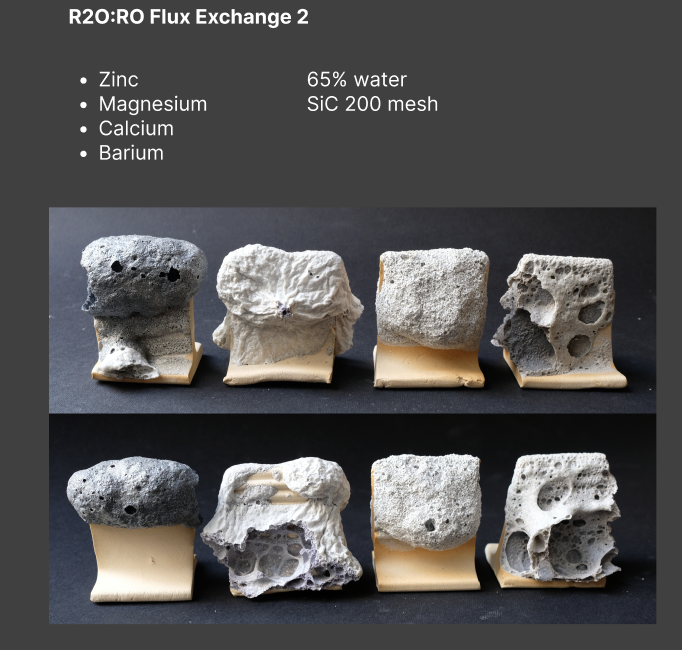
My Go-To Fluxes for Lava Glaze
For classic lava — the craters, the rough volcanic surface, the kind of texture that looks like it came out of the earth — calcium, strontium, and barium are my first choices. Often in combination, often in varying proportions depending on what I'm trying to achieve. Each fires differently, each has a slightly different character, and there's a lot of territory to explore between them.
Zinc and magnesium I use when I want something puffier, softer, more crawly. They're not lava glazes in the traditional sense — they're their own category of surface. Sometimes they're strange and interesting. Sometimes they're strange and a little ugly. The results depend heavily on the rest of the recipe and on application thickness.
The honest takeaway: there is no single best flux. But there is a best flux for what you're specifically trying to make.
Who Are These Glaze Textures For?
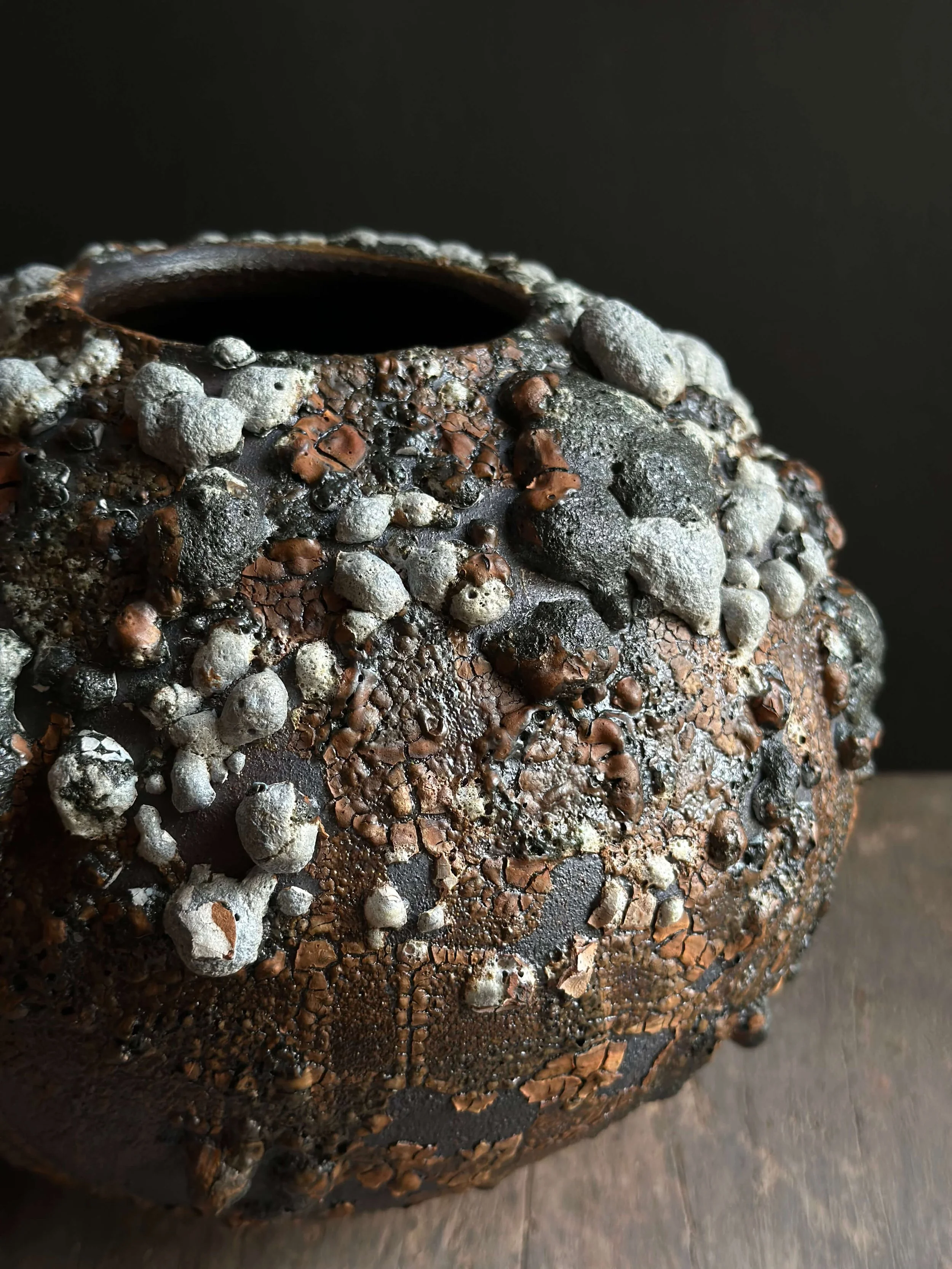
Ceramic textured vessel by Maria Loram
These are decorative glaze surfaces — not functional ones. Crawl glazes and underfired special effect glazes are porous and not food-safe. But for decorative ceramics — sculptures, textured ceramic vases, wall pieces, wabi-sabi pottery, art objects with organic pottery surfaces — they open up territory that a well-fired glossy glaze never reaches.
The earthy, nature-inspired ceramic aesthetic that so many makers are drawn to right now — rough surfaces that look like volcanic rock or weathered stone — often comes from exactly this kind of deliberate underfiring and thick application. It's not an accident. It's a technique.
Want to Learn How to Create Special Effect Glazes?
I don't share full recipes in this post — partly because glaze results depend so much on your specific kiln, clay body, and firing temperature, and partly because I think the method matters more than the recipe.
If you want to go deeper:
The Glaze is Lava is my dedicated online course on lava glaze, crater glaze, and silicon carbide-based special effect glazes. It covers the variables that change results — SiC mesh size, flux ratios, application, troubleshooting — so you understand why glazes behave the way they do, not just what to mix.
Textures in Ceramics is a broader 8-week online course covering ceramic texture techniques from natural materials (slips, rocks, sand, combustibles) through to textured and lava glazes. It's the right starting point if you want to develop a whole vocabulary of ceramic surface decoration.
And if you're specifically after glaze recipes and test results — including my monthly experiments — I post those on my Patreon.
What textures are you experimenting with right now? I'd love to know — send me an email or find me on Instagram.
About the Author
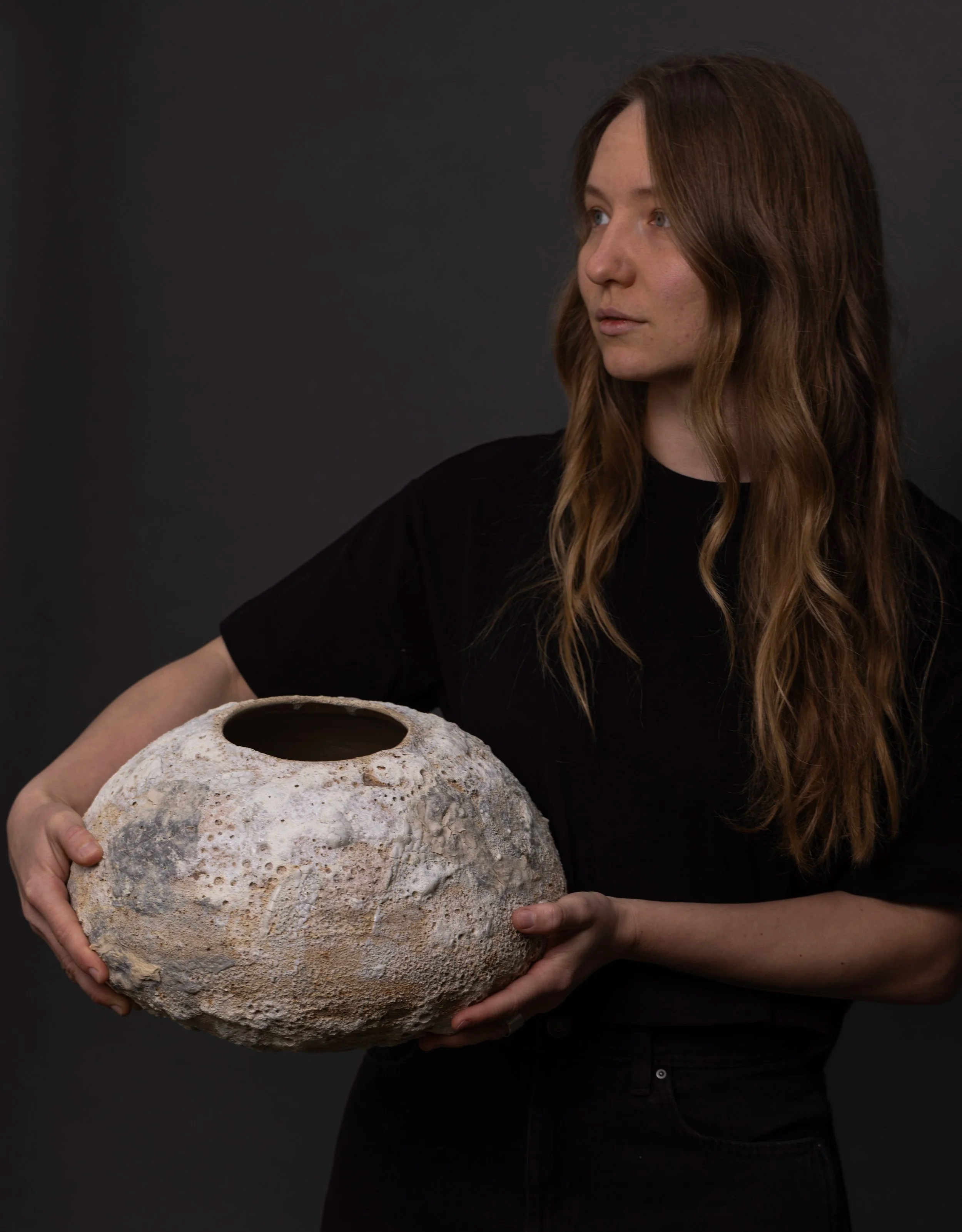
Hi, I’m Maria — a ceramic artist based in the US. I make sculptural lighting and hand-built vessels, and I share my studio process online.
I teach ceramics internationally and online. → loramceramics.com
This checklist is part of a growing library of free guides for ceramic artists and makers.