What Underfiring Does to Lava Glaze — Crawls, Craters, and Alien Ceramic Textures
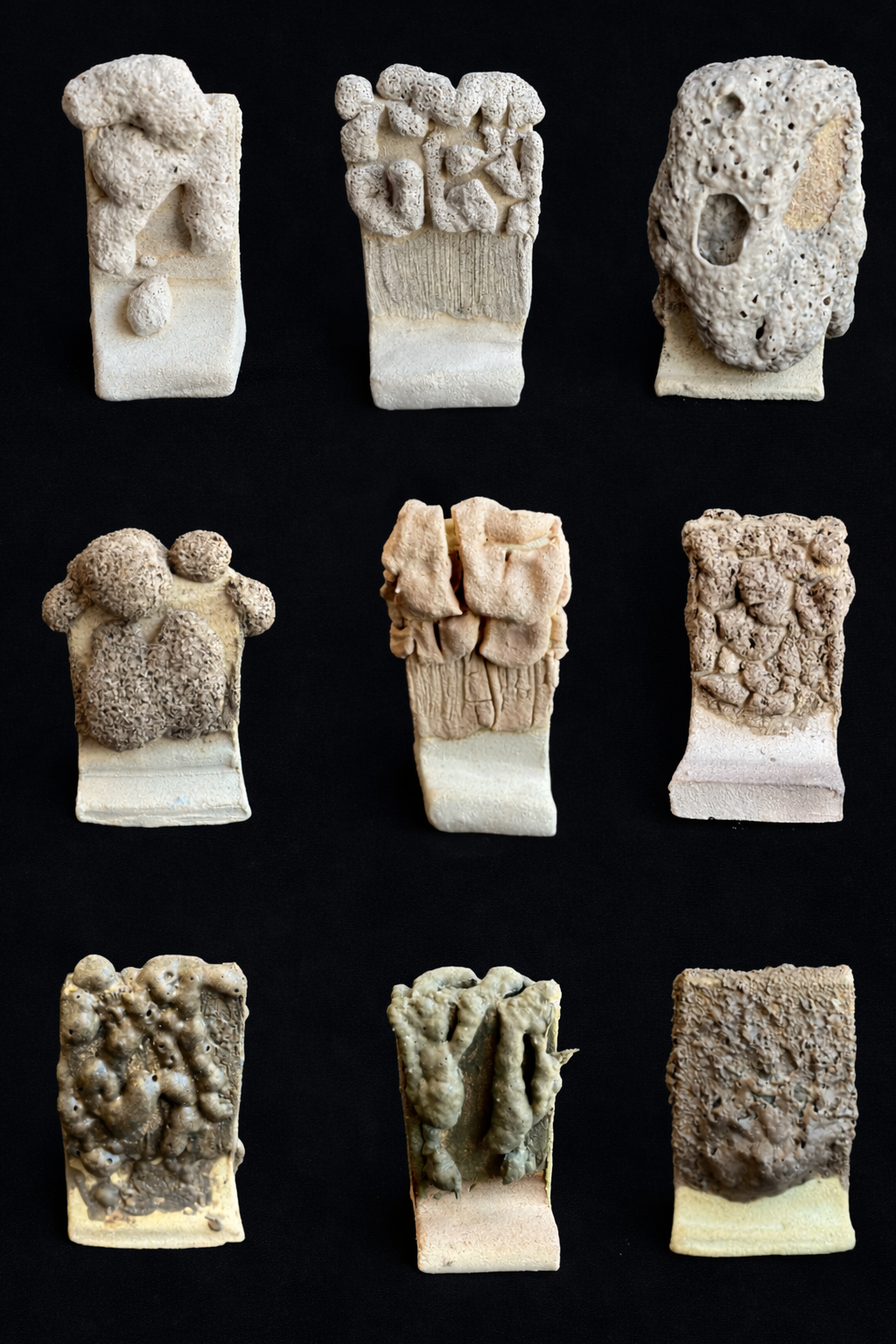
Underfired lava glaze test tiles showing crawl and pucker effects — ceramic texture experiments, Loram Ceramics workshop Lisbon
Have you ever seen a glaze that looks less like pottery and more like something that landed from another planet? Rough, crawling, puffy — somewhere between lava rock and coral, but weirder? That's what happens when you deliberately underfire a lava glaze. And it might be one of the most interesting things you can do in a ceramics studio.
This post is a review of three sets of glaze tests from my recent workshop in Lisbon, Portugal — where underfiring turned out to be the most exciting thing that happened all week.
What Is Underfiring, and Why Would You Do It on Purpose?
Underfiring means stopping your kiln before the glaze has fully melted. Normally, that's a mistake — the glaze looks rough, unfinished, unstable. But with special effect glazes like lava glaze, crater glaze, and silicon carbide-based glazes, underfiring doesn't ruin things. It transforms them.
Instead of a smooth, flowing volcanic surface, you get something rawer: glazes that crawl, pucker, and freeze mid-motion. For decorative ceramics, sculptures, and vessels that aren't meant to hold food, this opens up a completely different world of ceramic texture.
Three Sets of Tests from the Lisbon Glaze Workshop
During our intensive workshop, participants mixed around 300–500 glaze tests over the course of a few days. I chose to fire cautiously — cone 6, mid-to-fast speed — and the underfiring that resulted gave us some of the most interesting surfaces I've seen.
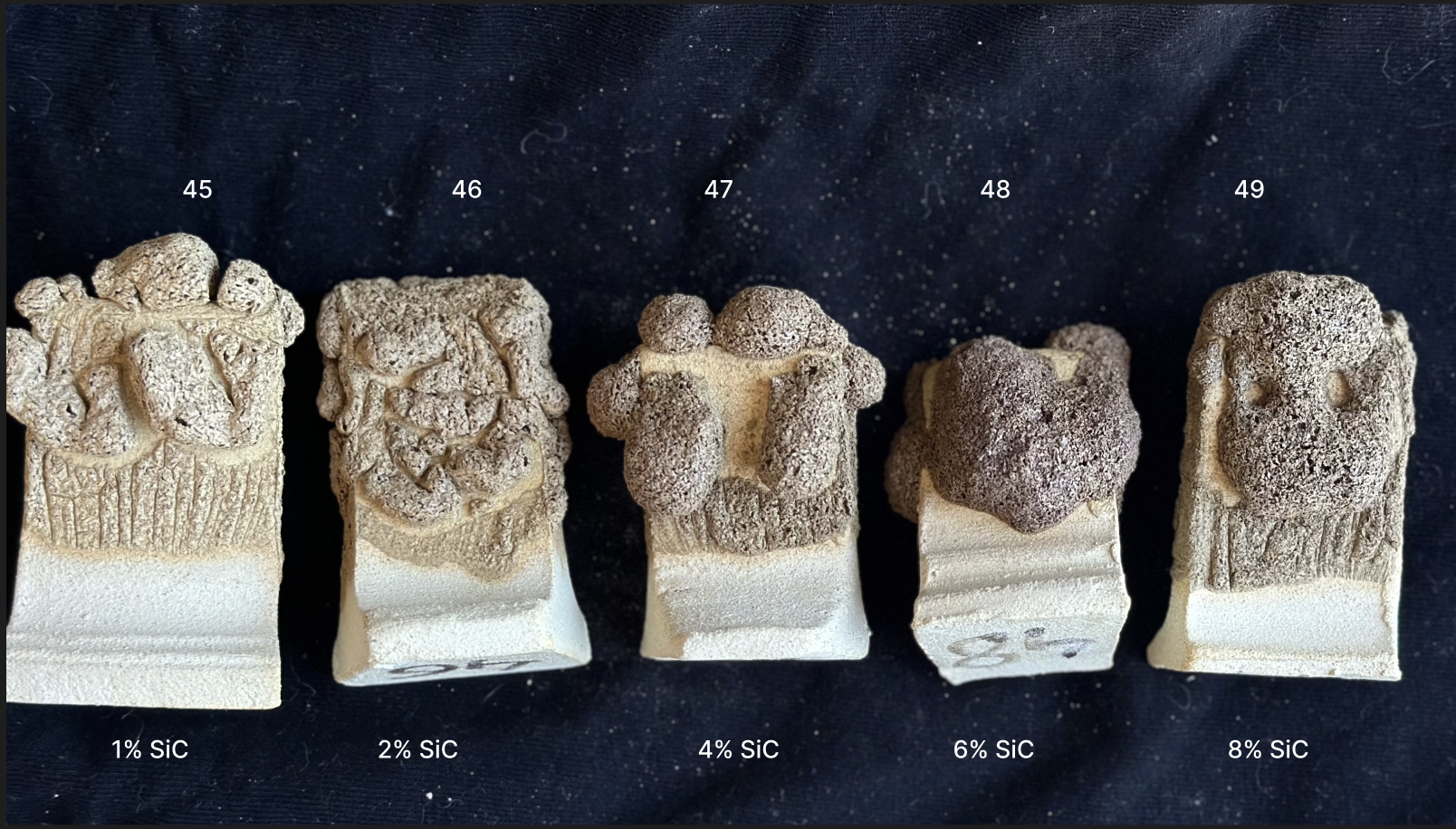
Test Set 1 — Calcium-Based Lava at Varying Silicon Carbide
The first set was a calcium-based lava glaze — one of my favourites. Instead of barium, we used whiting as the flux, and tested different amounts of silicon carbide (SiC) from 1% to 8%. Because the kiln ran slightly cool, the lava didn't fully open into the volcanic surface you'd expect. Instead, it crawled — puffing up into what I can only describe as a fat, bubbly crawl. Compact in some spots, more open in others, depending on how much the glaze had melted.
Make it stand out
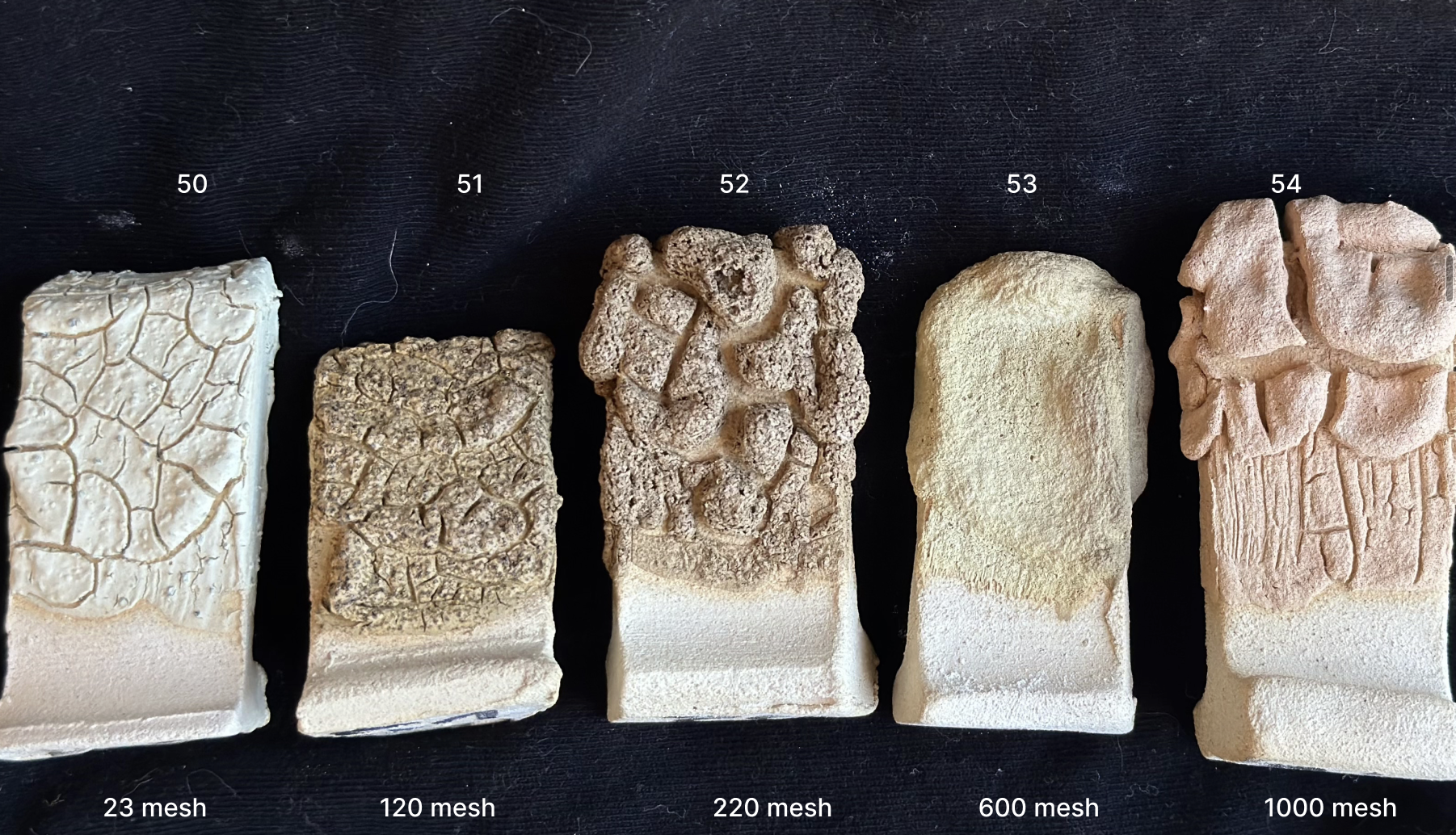
Test Set 2 — Color Surprises Across Different Mesh Sizes
The second set was supposed to be a range of lava glazes — same base, different mesh sizes of silicon carbide. Because of the underfiring, none of them developed into traditional lava surfaces. Instead, every single one crawled into a different colour: greens, yellows, unexpected earth tones. Some of it came from chrome off-gassing from neighbouring test tiles in the kiln. Some of it, again, was probably the titanium dioxide behaving differently than usual.
The result looked almost random, but it wasn't. It was the kiln atmosphere, the materials, and the temperature working together in a way we hadn't planned — and producing surfaces that would be nearly impossible to recreate intentionally. That's the magic of glaze testing at scale.
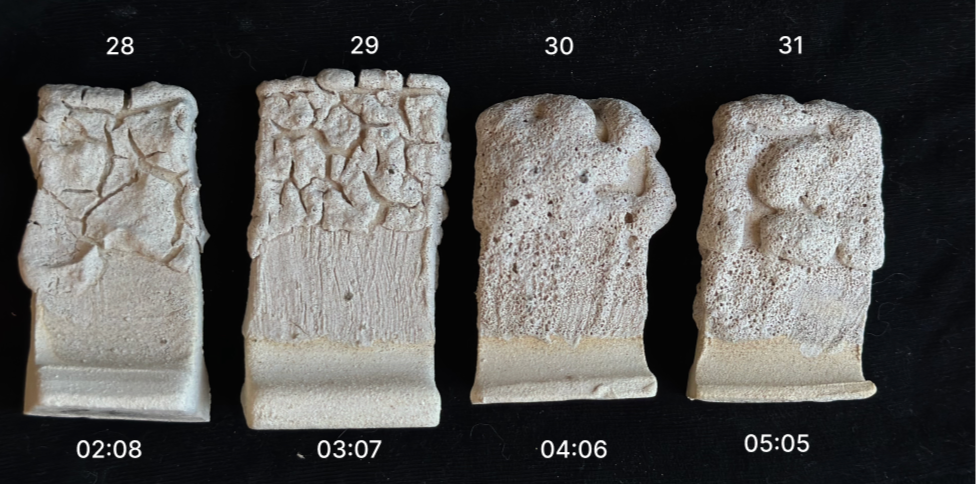
Test Set 3 — Flux Ratios and the Glazes That Refused to Melt
The third set explored something more technical: changing the R2O to RO flux ratios within a glaze. Without going too far into the chemistry — there are two main families of fluxes in a glaze. When you tip the balance too far toward RO fluxes (calcium, magnesium, barium, zinc, strontium), the glaze often struggles to melt at lower temperatures. That's exactly what happened here. Very little melted fully, and the result was a whole series of crawly, alien surfaces in various states of movement. Some barely moved. Some curled into beautiful, tight shapes that would work perfectly on sculptural vessels.
Test 29 in particular created a curl so precise and elegant I'd be happy to use it on a finished piece.
Who Are These Glazes For?
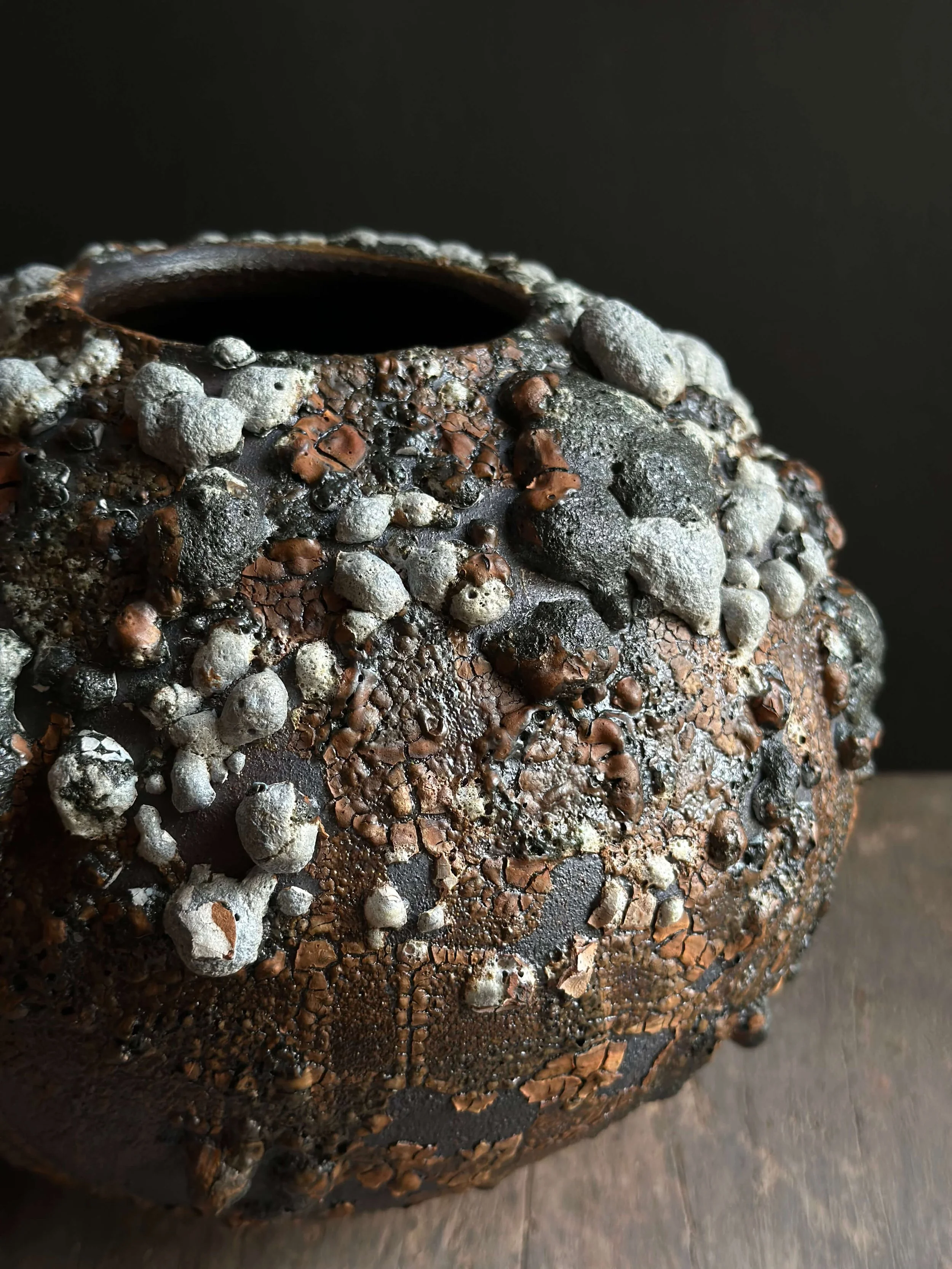
Ceramic textured vessel by Maria Loram
These are not functional glazes. They're not food safe, they're not stable enough for everyday use, and they're not meant to be. But for decorative ceramics — sculptures, vases, wall pieces, art objects — underfired special effect glazes open up territory that well-fired glazes never reach.
The traditional "rules" of ceramics (stable glaze, proper melt, food safety) exist for a reason. But decorative and sculptural work doesn't have to follow them. Some of the most interesting ceramic surfaces exist precisely because someone let the kiln run differently.
Want to Learn How to Create Glazes Like This?
I don't share full recipes in this post — partly because glaze results depend so much on your specific kiln, clay body, and firing temperature, and partly because I think the method matters more than the recipe.
If you want to go deeper:
The Glaze is Lava is my dedicated online course on lava glaze, crater glaze, and silicon carbide-based special effect glazes. It covers the variables that change results — SiC mesh size, flux ratios, application, troubleshooting — so you understand why glazes behave the way they do, not just what to mix.
Textures in Ceramics is a broader 8-week online course covering ceramic texture techniques from natural materials (slips, rocks, sand, combustibles) through to textured and lava glazes. It's the right starting point if you want to develop a whole vocabulary of ceramic surface decoration.
And if you're specifically after glaze recipes and test results — including my monthly experiments — I post those on my Patreon.
What textures are you experimenting with right now? I'd love to know — send me an email or find me on Instagram.
About the Author
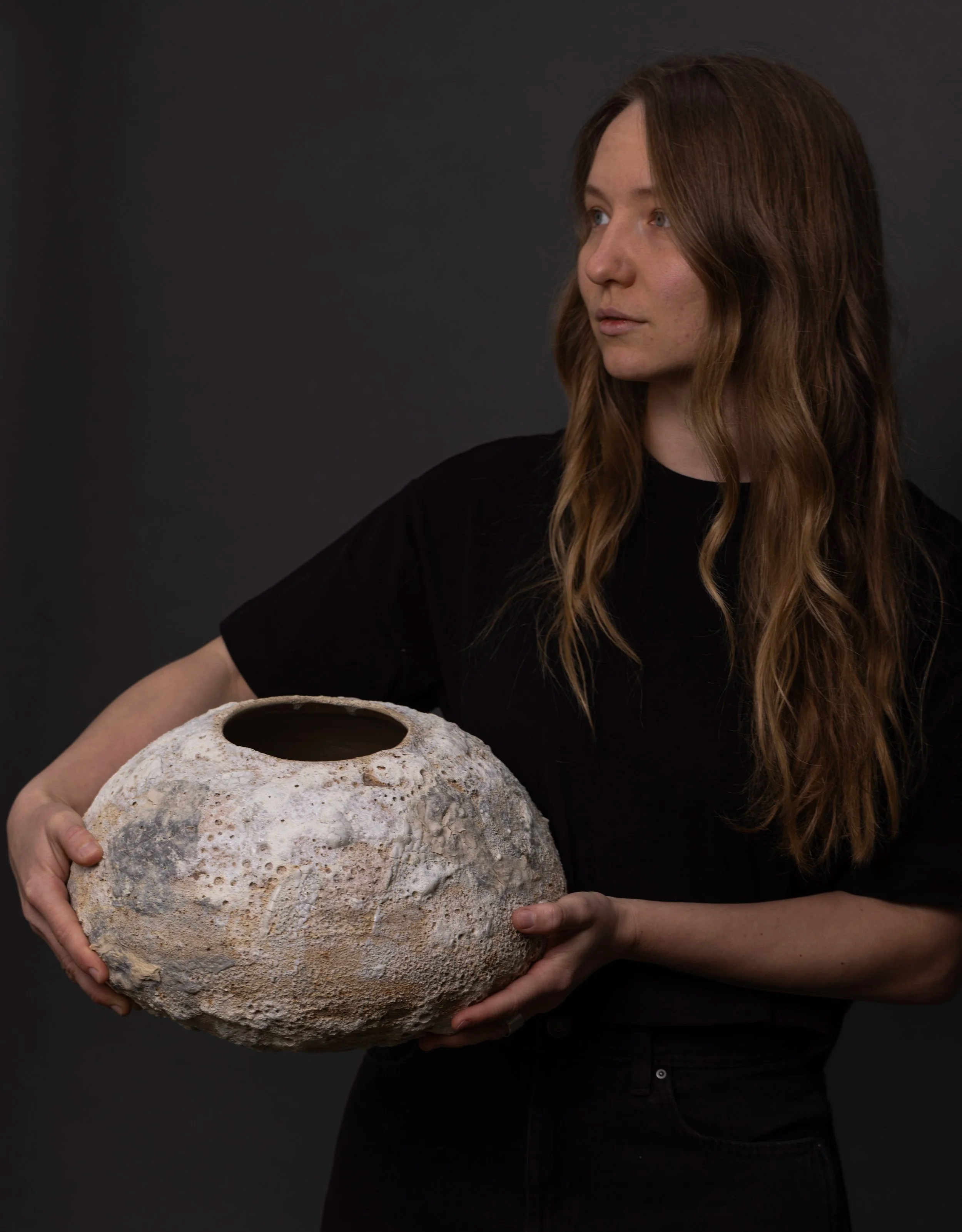
Hi, I’m Maria — a ceramic artist based in the US. I make sculptural lighting and hand-built vessels, and I share my studio process online.
I teach ceramics internationally and online. → loramceramics.com
This checklist is part of a growing library of free guides for ceramic artists and makers.