How Flux Ratios Change Lava Glaze — R2O, RO, and Three Sets of Tests
If you've ever fired a lava glaze and gotten something completely flat and uninteresting — no bubbles, no texture, just a dull surface — there's a good chance the answer is in the flux ratios. Specifically, the balance between R2O and RO fluxes in the glaze chemistry. It's one of the most powerful variables you can adjust in a lava glaze, and one of the least talked about.
This is a glaze review from three test sets — two from workshops in Bali, one from Portugal — each one exploring what happens when you shift that balance.
What Are R2O and RO Fluxes?
A quick primer for anyone new to glaze chemistry. Fluxes are the materials in a glaze that help it melt. But not all fluxes behave the same way, and in glaze chemistry, they're divided into two main families based on where they sit in the periodic table.
R2O fluxes — lithium, sodium, and potassium — are the more active, "hot" fluxes. In practice, these come from materials like nepheline syenite and potash feldspar. RO fluxes — calcium, magnesium, zinc, strontium, and barium — sit in the second column of the periodic table and tend to be less aggressively melting on their own.
In functional glaze chemistry, the standard advice is to keep the R2O:RO ratio somewhere around 0.3:0.7 for food safety and stability. But for special effect glazes like lava glaze, crater glaze, and crawl glaze — where you're not making dinnerware — that ratio becomes a creative tool rather than a safety constraint.
Three Test Sets: What Flux Ratios Do to a Lava Glaze
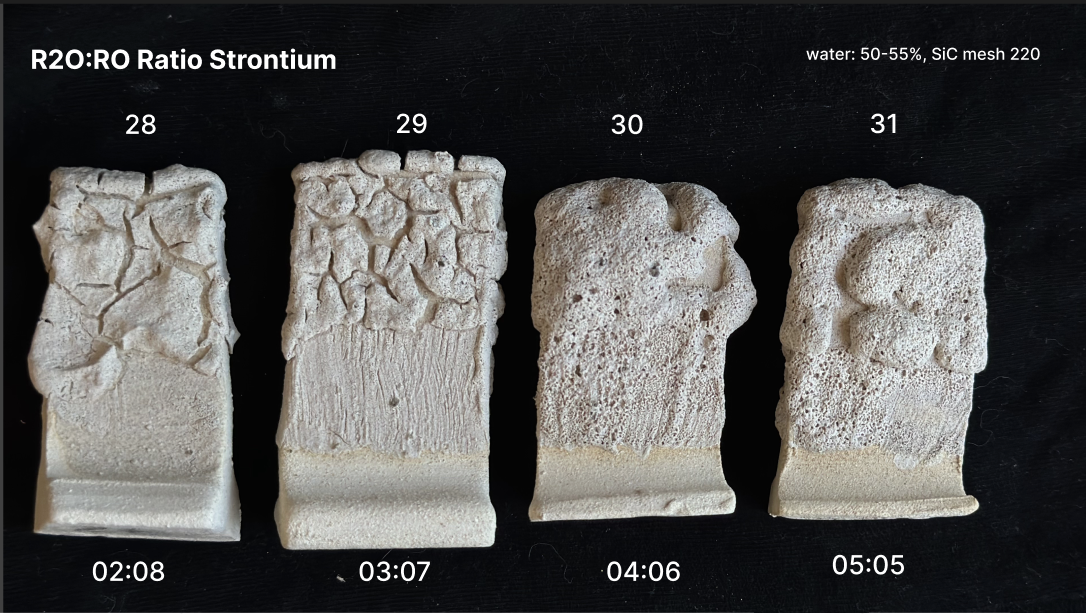
Test Set 1 — Underfired Lava, Portugal Workshop
These glazes were designed for cone 10 but fired at cone 6 — deliberately. At the lower-melt end, the result is somewhere between a lava and a crawl: raw, half-developed surfaces that have their own appeal. Add more melting power through flux and it moves closer to proper lava, though without the tight craters you'd get at full temperature. Favourite here is 0.3:0.7 — but worth noting that ratio alone doesn't make a glaze food-safe.
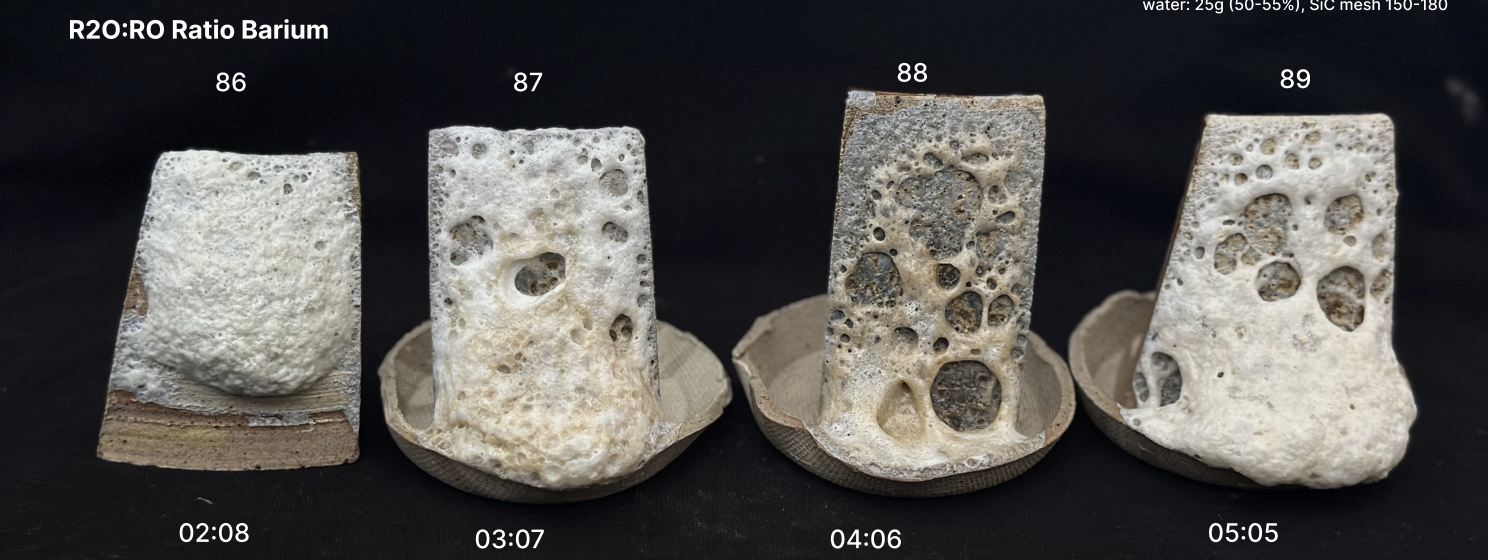
Test Set 2 — Barium Lava Glaze, Bali Workshop
A barium lava running through the same flux progression. At the RO-heavy end, the glaze is stiff and underdeveloped. As R2O increases, it comes alive — more movement, more texture, more of the bubbly volcanic surface that makes lava glaze worth using. The 0.4:0.6 ratio is the standout here: fully melted, beautiful surface, still controlled.
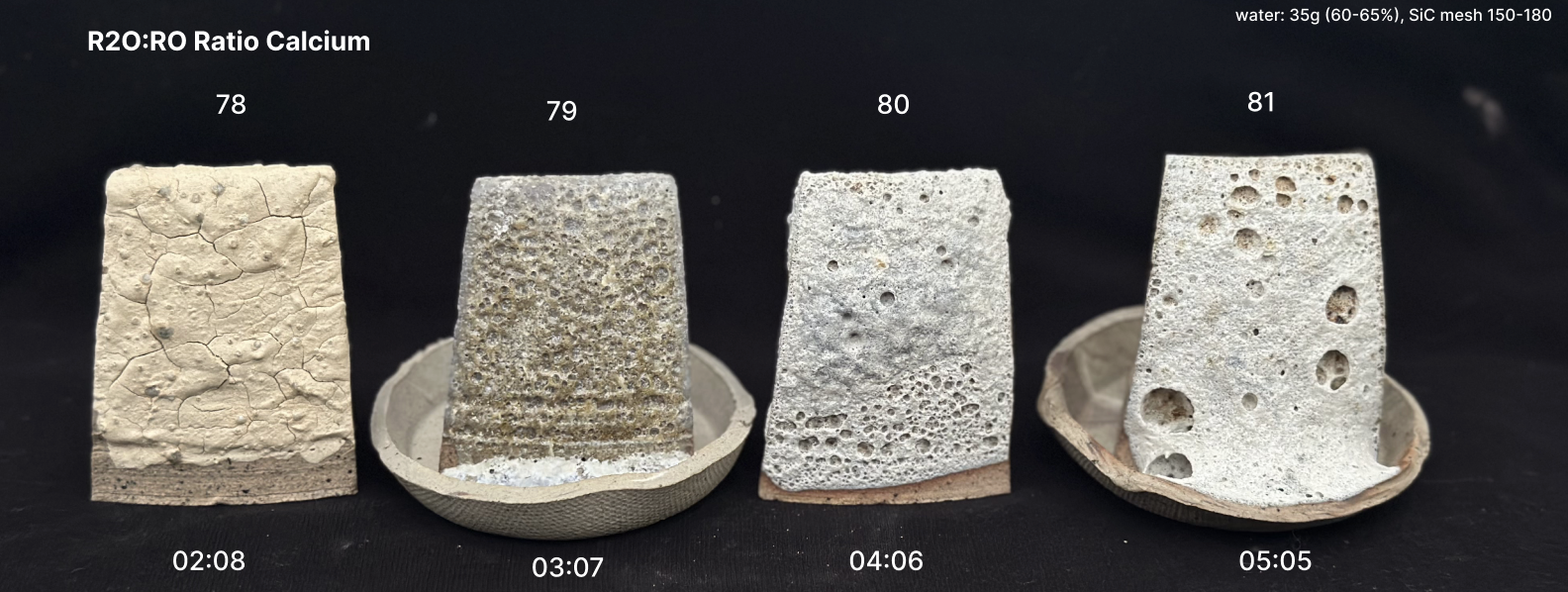
Test Set 3 — Calcium Lava Glaze: R2O:RO Progression
Four tiles, four ratios, one very clear story. Tile 78 at 0.2:0.8 barely melts — dry, cracked, flat. By 0.3:0.7 small craters start forming and the glaze runs enough to need a catch dish. At 0.4:0.6 it's a proper lava: dense, volcanic, controlled. At 0.5:0.5 it's past the point of control — large craters, significant pooling. The same recipe, four completely different results, just from shifting the flux balance.
Who Are These Glaze Textures For?
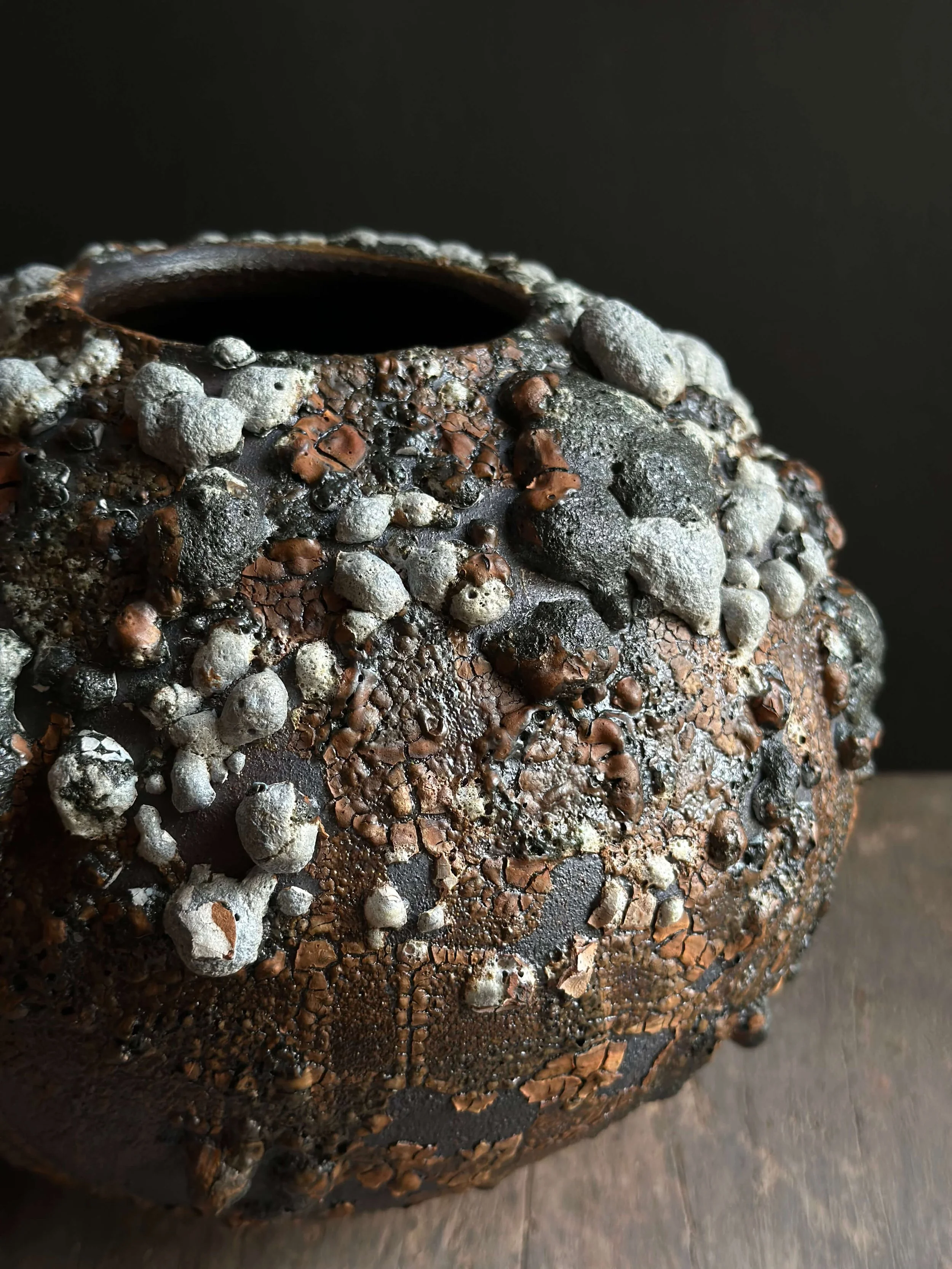
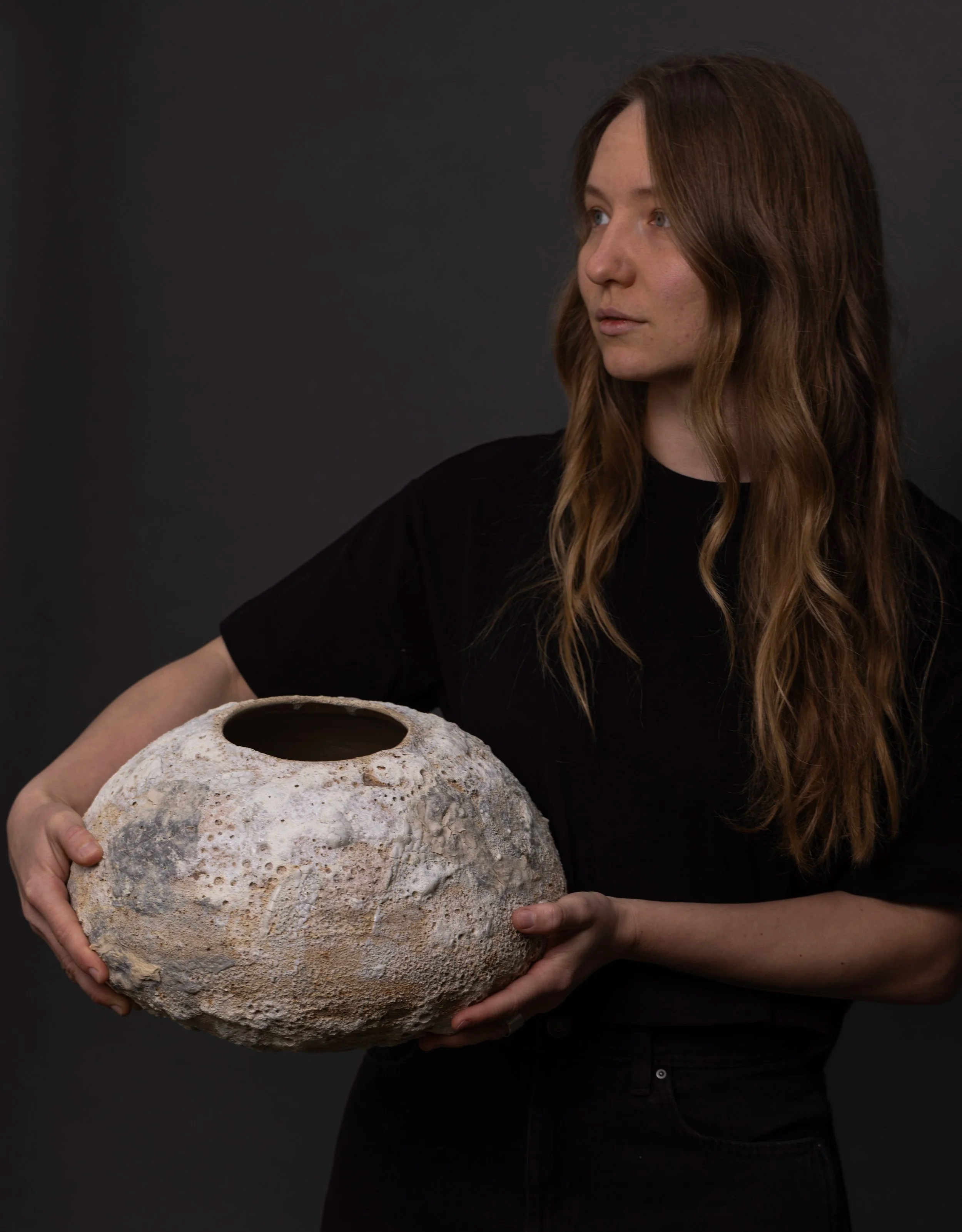
Ceramic textured vessel by Maria Loram
These are decorative glaze surfaces — not functional ones. Crawl glazes and underfired special effect glazes are porous and not food-safe. But for decorative ceramics — sculptures, textured ceramic vases, wall pieces, wabi-sabi pottery, art objects with organic pottery surfaces — they open up territory that a well-fired glossy glaze never reaches.
The earthy, nature-inspired ceramic aesthetic that so many makers are drawn to right now — rough surfaces that look like volcanic rock or weathered stone — often comes from exactly this kind of deliberate underfiring and thick application. It's not an accident. It's a technique.
Want to Learn How to Create Special Effect Glazes?
I don't share full recipes in this post — partly because glaze results depend so much on your specific kiln, clay body, and firing temperature, and partly because I think the method matters more than the recipe.
If you want to go deeper:
The Glaze is Lava is my dedicated online course on lava glaze, crater glaze, and silicon carbide-based special effect glazes. It covers the variables that change results — SiC mesh size, flux ratios, application, troubleshooting — so you understand why glazes behave the way they do, not just what to mix.
Textures in Ceramics is a broader 8-week online course covering ceramic texture techniques from natural materials (slips, rocks, sand, combustibles) through to textured and lava glazes. It's the right starting point if you want to develop a whole vocabulary of ceramic surface decoration.
And if you're specifically after glaze recipes and test results — including my monthly experiments — I post those on my Patreon.
What textures are you experimenting with right now? I'd love to know — send me an email or find me on Instagram.
About the Author
Hi, I’m Maria — a ceramic artist based in the US. I make sculptural lighting and hand-built vessels, and I share my studio process online.
I teach ceramics internationally and online. → loramceramics.com
This checklist is part of a growing library of free guides for ceramic artists and makers.